Bettiah, India
- 127,008 people
- 2 places to visit
- 26.8026, 84.5202
Places to Visit (2)
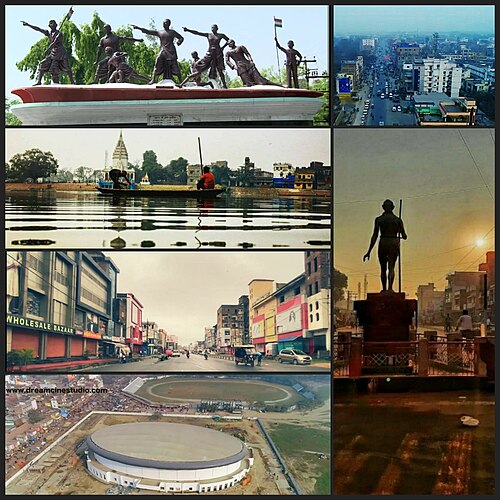
Bettiah is a city in the West Champaran district of Bihar, India, known for its historical significance and cultural heritage. Located about 200 kilometers northwest of Patna, the state capital, Bettiah serves as an important administrative and educational hub in the region. The city is situated on the foothills of the Himalayas and is blessed with a diverse landscape that includes rivers, forests, and agricultural land. Bettiah has been a focal point in the Champaran movement, a significant episode in India's struggle for independence, led by Mahatma Gandhi in 1917 against the oppressive policies of British landlords involving indigo cultivation.
The economy of Bettiah primarily relies on agriculture, with rice, wheat, and sugarcane being the main crops. In addition to agriculture, Bettiah has a growing small-scale industries sector, including food processing and handicrafts. The city also hosts several educational institutions, contributing to literacy and skills development. The cultural fabric of Bettiah is rich, characterized by various festivals, including Chhath Puja and Holi, which are celebrated with fervor. The local cuisine reflects the agricultural bounty of the region, featuring dishes such as litti-chokha, which is a popular local delicacy. Despite facing challenges like infrastructure development and urbanization, Bettiah continues to evolve while preserving its distinct identity and traditions.
Facts about Bettiah
- Bettiah is known as the cultural hub of West Champaran district in Bihar, India, and is renowned for its rich cultural heritage, particularly in folk music and dance.
- The city has historical significance as it played a role in the Champaran Satyagraha led by Mahatma Gandhi in 1917, which was pivotal in India's struggle for independence.
- Bettiah is home to the famous Bettiah Raj Palace, which showcases Indo-Saracenic architecture and was the residence of the local zamindar (landlord) during the British Raj.
- The town is known for its unique connection to the Mughal Empire and has historical ties to several notable figures in Indian history, including the Nawab of Bettiah.
- Bettiah hosts the annual 'Bettiah Mahotsav', celebrating local culture, art, and cuisine, making it a significant event in the region's social calendar.
- The city has a vibrant agricultural background, with significant production of rice, wheat, and pulses, contributing to its economy and local food culture.
- Bettiah is also recognized for its educational institutions, including the historic K. K. College, which contributes to the city's academic reputation.
- The town features several ancient temples, such as the Bhagwan Sitaram Temple, which attract pilgrims and tourists alike, adding to its spiritual significance.
- Bettiah's strategic location near the Gandak River has made it an important commercial and trade center in the region for decades.
- The city has a diverse population, comprising various communities and cultures, which adds to its rich tapestry of traditions and festivals celebrated throughout the year.