Bhimber, Pakistan
- 342,900 people
- 2 places to visit
- 32.9753, 74.0858
Places to Visit (2)
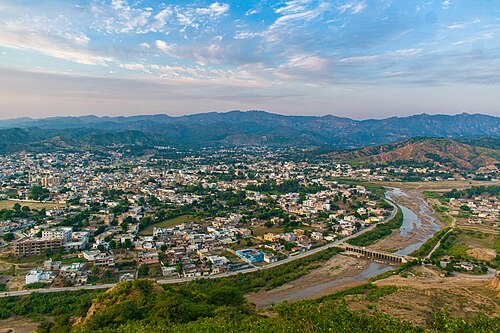
Bhimber is a city located in the Azad Jammu and Kashmir (AJK) region of Pakistan. It serves as the administrative capital of the Bhimber District, which is situated near the international border with Indian-administered Jammu and Kashmir. The city is strategically important due to its proximity to Line of Control (LoC) and has historical significance related to the ongoing Kashmir conflict. With a population of approximately 30,000 inhabitants, Bhimber is characterized by its diverse demographics, consisting mainly of Kashmiris, along with various ethnic and linguistic groups. The local economy largely depends on agriculture, with the cultivation of crops such as wheat, maize, and rice being common. Additionally, remittances from residents working abroad contribute to the community's financial stability.
Bhimber is known for its scenic landscapes, lying at the foot of the picturesque Pir Panjal mountain range. The surrounding area features lush green hills, valleys, and rivers, attracting both local visitors and tourists to its natural beauty. Bhimber has a rich cultural heritage that reflects the traditions of the Kashmiri people, including music, dance, and local handicrafts. The city also has key educational institutions, health facilities, and markets that cater to the needs of its residents. In terms of governance, Bhimber operates under a parliamentary democracy, with local representatives elected to address the needs of the community. The infrastructure in Bhimber has improved in recent years, with ongoing development projects aimed at enhancing connectivity and public services, although challenges remain due to its geographical location and socio-political dynamics.
In summary, Bhimber is a vibrant city that plays a crucial role in the socio-economic framework of Azad Jammu and Kashmir. With its geographical significance, natural beauty, and cultural richness, Bhimber continues to be an important center for residents and visitors alike, fostering a sense of community while navigating the challenges of its complex political landscape.
Facts about Bhimber
- Bhimber is historically significant as it was one of the ancient towns in the region and played a role during the partition of India in 1947.
- The city is known for its unique blend of Sikh and Muslim cultures, with several historic gurdwaras and mosques coexisting in proximity.
- Bhimber is the administrative headquarter of the Bhimber District in Azad Jammu and Kashmir, distinguishing it as an important political center in the region.
- The city's economy is primarily based on agriculture and livestock, making it one of the key agricultural hubs in Azad Kashmir.
- Bhimber hosts the annual 'Bhimber Mela', a cultural festival that showcases local traditions, crafts, and cuisine.
- The nearby Ramkot Fort, situated on the banks of the Jhelum River, is a historical landmark that attracts visitors due to its strategic location and architecture.
- Bhimber is renowned for its production of high-quality citrus fruits, especially oranges, contributing to its reputation as a fruit-producing region.
- The area is rich in folklore and history, particularly associated with the legendary figure of Baba Bhimber, after whom the city is named.
- Bhimber is characterized by its stunning natural landscapes, with mountains and rivers that provide opportunities for eco-tourism and outdoor activities.
- The city's unique geographical location near the Line of Control adds a distinct geopolitical dimension, making it a focal point in discussions about Kashmir.