Bhubaneswar, India
- 837,000 people
- 15 places to visit
- 20.2961, 85.8245
Places to Visit (15)
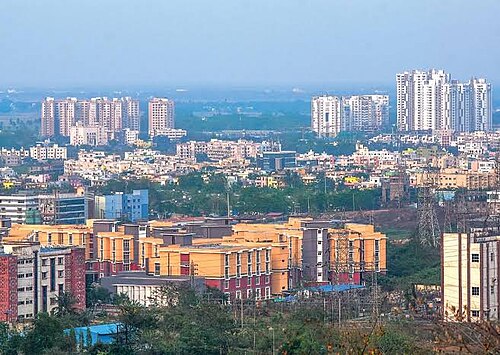
Bhubaneswar, the capital city of the Indian state of Odisha, is a prominent urban center known for its rich cultural heritage and historical significance. Often referred to as the "Temple City of India," Bhubaneswar is home to a plethora of ancient temples, showcasing remarkable Kalinga architecture. Notable examples include the Lingaraja Temple, dedicated to Lord Shiva, and the Mukteswara Temple, celebrated for its intricate carvings and sculptures. The city emerged as a significant urban center in the 3rd century BCE during the reign of Emperor Ashoka and subsequently flourished under various dynasties, particularly during the rule of the Kalingas.
Today, Bhubaneswar is a thriving metropolis that blends tradition with modernity. The city has witnessed rapid urbanization, becoming a hub for education, commerce, and IT, with numerous institutions of higher learning, such as the Indian Institute of Technology (IIT) Bhubaneswar and Xavier Institute of Management. Bhubaneswar’s urban planning reflects a well-structured layout incorporating green spaces, such as the Ekamra Kanan and Nandankanan Zoological Park, aimed at enhancing the quality of life for its residents. The city's burgeoning infrastructure, including well-maintained roads and public transportation systems, has contributed to its increasing attractiveness for both residents and tourists.
Additionally, Bhubaneswar plays a vital role in the cultural landscape of India, hosting several festivals and events that celebrate its diverse heritage. The Rajarani Music Festival and the Odisha Dance Festival draw participants and audiences from across the country and beyond, fostering a sense of community and promoting the traditional arts. The city is also an important administrative and economic center, with a growing number of industries, including information technology, manufacturing, and tourism. Bhubaneswar's strategic location, coupled with its historical and cultural significance, positions it as a key player in the development of the eastern region of India while retaining its unique identity rooted in ancient traditions.
Facts about Bhubaneswar
- Bhubaneswar is known as the 'Temple City of India' due to its rich heritage of temples, particularly those built during the Kalinga dynasty.
- The city is home to over 700 temples, with notable examples including the Lingaraj Temple, which is a significant example of Kalinga architecture and dates back to the 11th century.
- Bhubaneswar was one of the first planned cities in India post-independence, designed by the German architect Otto Königsberger in the 1940s.
- The city played a pivotal role in the Kalinga War (261 BC), which was fought between Emperor Ashoka and the Kalinga Kingdom, leading to Ashoka's embrace of Buddhism.
- Bhubaneswar is part of the 'Golden Triangle of Odisha,' along with Puri and Konark, attracting numerous tourists to its historical and cultural sites.
- The Udayagiri and Khandagiri Caves, located near Bhubaneswar, are significant historical sites that date back to the 2nd century BCE and are associated with Jain monks.
- The city is renowned for its Sand Art, with international recognition gained through the work of artists like Sudarsan Pattnaik, who have won awards at global competitions.
- Bhubaneswar is also a hub for sports and has hosted several national and international events, including the Hockey World Cup in 2018.
- The city has been selected as one of the first 20 Indian cities for the Smart Cities Mission, aiming for sustainable urban development.
- Bhubaneswar's vibrant culture is showcased during events like the Ekamra Walks, which offer guided tours of its historical and architectural marvels.