Białystok, Poland
- 291,855 people
- 17 places to visit
- 53.1325, 23.1688
Places to Visit (17)
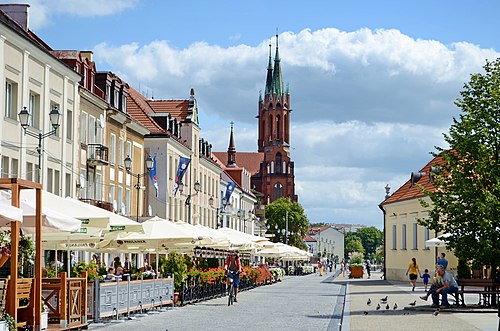
Białystok, the largest city in northeastern Poland, serves as the capital of the Podlaskie Voivodeship. With a population of approximately 300,000, it is a vital cultural and economic center in the region. The city's history dates back to the 14th century, initially established as a small settlement. Białystok gained prominence in the 18th century when it became a royal city under the reign of King Augustus III. Over time, it transformed into a major industrial hub, especially in the textile and manufacturing sectors, attracting a diverse population, which has enriched its cultural tapestry.
Today, Białystok is characterized by its blend of modernity and tradition. The city boasts several notable landmarks, including the Branicki Palace, an impressive baroque residence that reflects the city's aristocratic past. The Palace Gardens, designed in the French style, are a popular recreational area for residents and visitors alike. Białystok is also home to various museums, theaters, and educational institutions, including the University of Białystok, which contributes to its vibrant academic atmosphere. Moreover, the city is renowned for its multicultural heritage, with significant Belarusian, Jewish, and Lithuanian communities influencing local customs and festivals, such as the Juwenalia student festival and the Białystok Cathedral's annual events.
Białystok's geographical position near the Białowieża Forest, a UNESCO World Heritage site and one of the last and largest primary Beech forests in Europe, adds to its appeal. The region is rich in natural beauty, featuring numerous parks and green spaces, which have made it an attractive destination for eco-tourism. Combined with its economic growth and a commitment to enhancing infrastructure, Białystok is positioning itself as a key player in Poland's development, aiming to become a lively intersection of business and culture in the heart of the country.
Facts about Białystok
- Białystok is known as the largest city in northeastern Poland and serves as the capital of the Podlaskie Voivodeship.
- The city's history dates back to the 15th century, and it has a unique blend of cultures, influenced by its historical connections with various nationalities, including Poles, Belarusians, Ukrainians, and Jews.
- Białystok is home to the largest palace complex in northeastern Poland, the Branicki Palace, often referred to as 'the Versailles of Podlachia'.
- The city has a significant Jewish heritage, and before World War II, Białystok had a thriving Jewish community which contributed greatly to its cultural fabric.
- Białystok is recognized for its green spaces and parks, including the beautiful Planty Park, which enhances the city's quality of life and recreational opportunities.
- The city is a hub for higher education, hosting the University of Białystok and other institutions, which attract students from diverse regions.
- Białystok is famous for its annual Białystok Cathedral's Organ Concerts, showcasing the city's vibrant cultural scene and musical heritage.
- The city is strategically located near the borders of Belarus and Lithuania, making it an important point for trade and travel within the region.
- Białystok has an active cultural scene with numerous festivals, like the Białystok Literary Meeting, which promotes literature and dialogue among authors and readers.
- In recent years, Białystok has gained recognition for its efforts in urban sustainability and eco-initiatives, distinguishing it among Polish cities in environmental awareness and innovation.