Biancavilla, Italy
- 23,188 people
- 4 places to visit
- 37.644, 14.8665
Places to Visit (4)
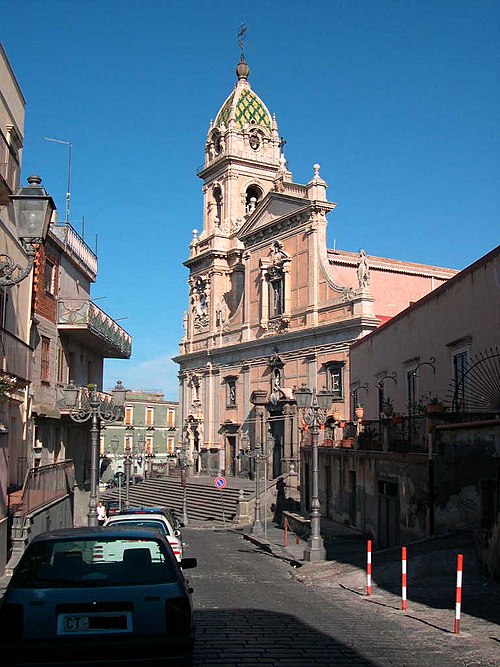
Biancavilla is a charming municipality located in the Metropolitan City of Catania, Sicily, Italy. Nestled at the foot of Mount Etna, the highest and most active volcano in Europe, the town boasts a picturesque landscape that combines natural beauty with rich historical significance. Officially established as a municipality in 1837, Biancavilla has roots that trace back to the Middle Ages, with its origins linked to the settlement of the indigenous Siculi people. The town's geographical position offers panoramic views and access to various outdoor activities, making it a desirable location for both residents and visitors.
The architectural landscape of Biancavilla reflects its historical evolution, showcasing a mix of Baroque and Neoclassical styles. Notable landmarks include the Chiesa del Calvario, a church that stands as a testament to the town's religious heritage, and the Sanctuary of Santa Maria dell'Elemosina, which attracts pilgrims and tourists alike. The local economy is primarily based on agriculture, with the surrounding region known for producing citrus fruits, olives, and other crops. The town also celebrates its vibrant cultural traditions through various annual festivals, such as the Feast of San Placido, which features processions, music, and gastronomy, illustrating the community's strong connection to its cultural identity.
Biancavilla is also well-connected to larger cities, such as Catania and Taormina, making it an ideal base for exploring the eastern coast of Sicily. The local population, which is around 14,000 residents, enjoys a tranquil lifestyle amid historical surroundings. Tourism is gradually growing, thanks to its unique combination of natural attractions, historical sites, and its proximity to the majestic Mount Etna. As Biancavilla continues to embrace its heritage while adapting to modernity, it remains a hidden gem in the heart of Sicily, offering visitors an authentic taste of Italian culture and the stunning beauty of its landscape.
Facts about Biancavilla
- Biancavilla is known for its rich Baroque architecture, particularly seen in its churches and civic buildings, distinguishing it from many other towns in Sicily.
- The city is situated at the foot of Mount Etna, providing residents and visitors with unique opportunities for volcanic tourism and stunning natural landscapes.
- Biancavilla has a deep-rooted tradition in the production of handmade ceramics, an art form that has been passed down through generations, setting it apart from other Sicilian cities.
- The town hosts the Feast of Saint Rocco every August, featuring vibrant processions and traditional music, which reflects its strong community spirit and cultural heritage.
- Biancavilla has a significant historical legacy, being originally founded in the 14th century, with its name derived from the Latin word 'bianca', meaning 'white', likely referring to the local chalky cliffs.
- The annual Palio dei Ceri in Biancavilla showcases a competition of homemade wooden structures, representing the city's dedication to preserving unique local traditions.
- Biancavilla’s Basilica of Santa Maria dell'Elemosina is a notable landmark, famous for its impressive façade and historical significance, playing a central role in the local religious life.
- The city is approximately 25 kilometers from Catania, making it an integral part of the metropolitan area while maintaining its own distinct cultural identity.
- Biancavilla boasts a thriving local gastronomy scene, with distinctive dishes that highlight the influences of Sicilian cuisine, including unique pastries and local wines.
- The local museum, Museo della Civiltà e della Cultura Contadina, showcases the agricultural history and rural traditions of Biancavilla, emphasizing its unique relationship with the surrounding landscape.