Bijapur, India
- 271,064 people
- 7 places to visit
- 16.8302, 75.71
Places to Visit (7)
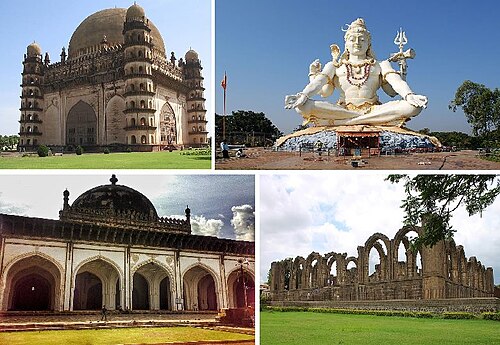
Bijapur, a city in the state of Karnataka, India, is renowned for its rich historical heritage and impressive architecture. Located about 530 kilometers northwest of Bangalore, it serves as the administrative headquarters of the Bijapur district. The city, known historically as Vijayapura, was established in the 10th century and later became the capital of the Adil Shah dynasty during the 16th and 17th centuries. Bijapur is particularly famous for its stunning Islamic architecture, a fusion of Persian and Indian styles. The most iconic structure in the city is the Gol Gumbaz, the mausoleum of Sultan Muhammad Adil Shah, which features the second-largest dome in the world and an impressive whispering gallery, where a person's voice can be heard even across vast distances.
In addition to Gol Gumbaz, Bijapur boasts a wealth of other historical monuments, including the Ibrahim Rauza, a beautiful tomb and mosque complex, and the Bijapur Fort, which showcases the military prowess of the Adil Shahi dynasty. The city is also notable for its well-preserved structures like the Burj of Bijapur, the Jamia Masjid, and the Asar Mahal, reflecting the artistic achievements of the time. Rich in culture, Bijapur is home to numerous festivals, including Dasara and Eid, which celebrate the city’s diverse population and heritage. The economy of Bijapur is primarily agrarian, with agriculture being a significant source of livelihood for many residents. Additionally, the city is known for its production of gold jewelry and agricultural products, contributing to its local economy. With a combination of historical significance, stunning architecture, and vibrant culture, Bijapur remains a fascinating destination for both historians and tourists alike.
Facts about Bijapur
- Bijapur is renowned for its unique Deccan Sultanate architecture, featuring monuments that exemplify a blend of Hindu and Islamic styles.
- The Ibrahim Rauza, a stunning mausoleum, is often referred to as a prototype for the Taj Mahal, showcasing intricate carvings and exquisite design.
- Bidar Fort, located near Bijapur, played a significant role in history with its impressive fortified walls and grand gateways, signifying the city's military importance.
- The city is home to the largest single-celled dome in the world, the Gol Gumbaz, which boasts an extraordinary acoustical phenomenon allowing sounds to echo up to 7 times.
- Bijapur has a rich history of rule by prominent dynasties, particularly the Adil Shahi dynasty, who contributed to the city's architectural and cultural wealth.
- It is known for its annual festivals celebrating traditional music and arts, attracting tourists and artists from across the country.
- The city has a significant historical connection to the Sufi saint Hazrat Channabasavanna, whose praises and teachings continue to influence the local culture.
- Bijapur was once part of the Kingdom of Vijayanagara, showcasing its strategic importance during the power struggles of the Deccan region.
- The city has a diverse population with a tapestry of cultures, reflected in its unique cuisine that blends Maratha, Mughal, and local flavors.
- The Malika-e-Maasi, an intricate Persian-style inscription in Bijapur, is considered one of the finest examples of calligraphy in India.