Bijie, China
- 1,137,383 people
- 1 places to visit
- 27.2985, 105.305
Places to Visit (1)
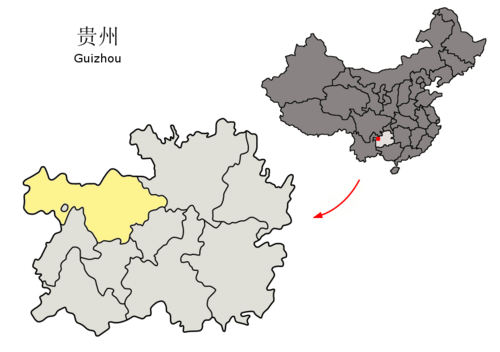
Bijie is a city located in the northwestern part of Guizhou Province, China. It serves as a prefecture-level city and is known for its rich cultural heritage and diverse natural landscapes. With a population of over 1.6 million people, Bijie covers an area of approximately 28,200 square kilometers. It is bordered by several other municipalities, including the provincial capital, Guiyang, to the southeast, and is characterized by a mix of mountainous terrain, lush forests, and fertile valleys. The city is an important center for agriculture, particularly in the production of tobacco, rice, and various fruits.
Historically, Bijie has played a significant role in Chinese history, particularly during the Ming and Qing dynasties. It is home to several ethnic minority groups, including the Miao and Bouyei, which contribute to its rich cultural tapestry. This diversity is reflected in local festivals, traditions, and cuisines that attract both domestic and international visitors. The city also features various natural attractions, such as the Bijie Chishui River and the scenic Bijie Mountain, making it a popular destination for eco-tourism. Additionally, Bijie has been a focal point for economic development in recent years, with initiatives to improve infrastructure and increase investment in tourism and agriculture, positioning the city as an emerging regional hub in southwest China.
As Bijie continues to grow, it remains committed to preserving its cultural heritage while adapting to modern challenges. The local government is focusing on sustainable development to ensure the environmental health of the region, promoting both economic growth and conservation efforts. Overall, Bijie's combination of rich history, ethnic diversity, and beautiful landscapes makes it a unique and intriguing city within China.
Facts about Bijie
- Bijie is known for its unique ethnic diversity, with various ethnic groups including Miao, Yi, and Bouyei, making it a cultural melting pot.
- The city is situated in the Guizhou province, which is renowned for its karst landscapes and rich biodiversity, particularly in the surrounding Wumeng Mountain area.
- Bijie is famous for the Huishui River, which is one of the primary water sources for the region, offering picturesque views and recreational opportunities.
- The cultural heritage of Bijie includes traditional festivals such as the Miao New Year and the Yi Fire Festival, which showcase the vibrant local customs and practices.
- Bijie is often referred to as the 'Home of the Wild Mushroom,' with abundant species of fungi that are celebrated in local cuisine and festivals.
- The city has a significant history in the Chinese Communist Party, as it served as a revolutionary base during the anti-Japanese war and subsequent civil conflicts.
- Bijie is also known for the famous Bijie Silkworm, a unique breed developed in the region, contributing to local silk production.
- The city hosts the annual Guizhou International Folklore Festival, attracting performers and cultural representatives from across the globe to celebrate local traditions.
- Bijie is home to the iconic Daliangshan Mountain, which is a popular spot for eco-tourism and hiking, attracting nature lovers and adventure seekers.
- The development of Bijie has focused on sustainable tourism and agriculture, making it a unique example of balancing economic growth with environmental preservation.