Birmingham, United Kingdom
- 1,144,919 people
- 16 places to visit
- 52.4823, -1.89
Places to Visit (16)
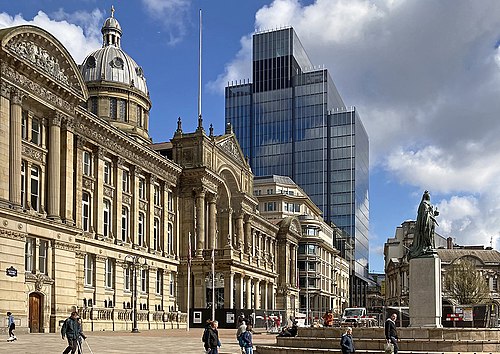
Birmingham, the second-largest city in the United Kingdom, is located in the West Midlands region of England. Known for its rich industrial heritage, Birmingham played a pivotal role during the Industrial Revolution, transforming from a small market town into a bustling metropolis. By the late 19th century, the city became a center for manufacturing and a hub for various industries, including metalworking, textiles, and machinery. The extensive canal network, once utilized for transporting goods, significantly contributed to the city’s economic growth and is one of the largest in the UK, second only to Venice.
Today, Birmingham is recognized for its diverse population and vibrant cultural scene. With over 1.1 million residents, it is a melting pot of cultures, reflected in its range of cuisines, festivals, and arts. The city is home to several prestigious institutions, including the University of Birmingham, which was established in 1900 and is among the UK's leading research universities. Birmingham also boasts numerous cultural attractions, such as the Birmingham Museum and Art Gallery, which houses an extensive collection of Pre-Raphaelite art, and the Symphony Hall, acclaimed for its exceptional acoustics and home to the City of Birmingham Symphony Orchestra. The city has undergone significant regeneration in recent years, revitalizing areas like the Bullring shopping center and the Custard Factory, a hub for creative businesses.
Birmingham's public transport system is well-developed, featuring a network of trains, trams, and buses, making it easily accessible. The city is also notable for its sporting heritage, being home to iconic clubs such as Aston Villa and Birmingham City in football, and Warwickshire County Cricket Club. Additionally, the city serves as a vital center for commerce and finance, with industries ranging from digital technology to healthcare thriving in the region. Birmingham's compilation of historical and modern elements, along with its commitment to inclusivity and innovation, makes it a dynamic city that continues to evolve while honoring its storied past.
Facts about Birmingham
- Birmingham is the second largest city in the UK, after London, and has a diverse population of over 1.1 million people.
- It is known as the 'City of a Thousand Trades' due to its historical significance in the Industrial Revolution, where it became a major center for manufacturing and engineering.
- Birmingham boasts the UK's largest city centre, with over 1,000 shops, making it a key retail destination.
- The city is home to Cadbury World, the popular visitor attraction dedicated to the history of chocolate making, reflecting Birmingham's rich confectionery heritage.
- Birmingham has more miles of canal than Venice, with over 35 miles of navigable waterways, showcasing its unique industrial canals.
- The Bullring Shopping Centre in Birmingham features the iconic Selfridges building, designed by architect Daniel Liebeskind, which has become an architectural landmark.
- Birmingham is famous for its cultural festivals, including the Birmingham International Dance Festival and the Birmingham Literature Festival, attracting global talent.
- The Birmingham Royal Ballet is one of the leading ballet companies in the UK, known for its innovative performances and commitment to new works.
- The city is known for its diverse culinary scene, especially its Indian cuisine, earning it the nickname 'Balti Triangle' for its numerous Indian restaurants.
- Birmingham's Symphony Hall is regarded as one of the best concert halls in the world, celebrated for its acoustics and hosting a wide range of musical events.