Bissau, Guinea-Bissau
- 439,704 people
- 4 places to visit
- 11.8636, -15.5977
Places to Visit (4)
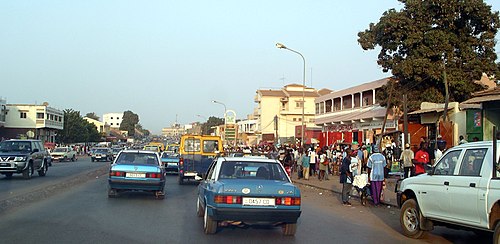
Bissau is the capital city of Guinea-Bissau, a country located on the west coast of Africa. It serves as the political, economic, and cultural heart of the nation. Bissau is situated on the northeastern shore of the Bijagós Archipelago, along the Geba River estuary. The city has a tropical savanna climate, characterized by a wet season from June to October and a dry season from November to May. The population of Bissau is diverse, with various ethnic groups including the Balanta, Fula, and Mandinga, which contributes to a rich cultural tapestry marked by unique traditions, languages, and cuisines.
As a port city, Bissau plays a crucial role in trade, particularly due to its harbor which is one of the few deep-water ports in the region. The city is home to several important institutions, including the National Assembly and various ministries, making it a central hub for governance. Bissau's architecture reflects its colonial history, with Portuguese influence visible in its buildings and layout. Landmarks such as the Fortaleza de São José da Amura and the Presidential Palace illustrate both the colonial past and the contemporary political life of the city. However, Bissau faces challenges such as political instability, infrastructure development, and issues relating to poverty. Despite these obstacles, the city retains a vibrant local culture, with bustling markets and lively street life that showcase the spirit of its residents.
Bissau's economy is primarily based on agriculture, though fishing and trade also contribute significantly. The city has seen attempts at economic diversification, but it remains heavily reliant on cashew nut exports. Additionally, the informal economy plays a significant role in providing livelihoods for many residents. Efforts have been made to improve the educational infrastructure and healthcare services, although access remains limited for a portion of the population. With its strategic location, cultural depth, and resilience, Bissau continues to evolve while striving to address the complexities of social and economic development in Guinea-Bissau.
Facts about Bissau
- Bissau is the capital and largest city of Guinea-Bissau, serving as the political, economic, and cultural center of the country.
- The city features the historic Fortaleza de São José da Amura, a fortress built by the Portuguese in the 18th century that is a key landmark and symbol of colonial history.
- Bissau is known for its vibrant local markets, particularly the Bandim Market, which is one of the largest in the country and a hub for local trade and commerce.
- The city has a unique blend of Portuguese and African cultures, evident in its architecture, cuisine, and local traditions.
- Bissau serves as the main port of Guinea-Bissau and plays a crucial role in the export of cashew nuts, the country's primary agricultural product.
- The city is home to several government institutions, including the Presidential Palace, and serves as the administrative heart of Guinea-Bissau.
- Bissau has a notable historical significance as it was a key location during the independence war from Portugal, achieving independence in 1973.
- The city hosts the Bissau-Guinean Creole language, known as Kriol, which is widely spoken among the local population and reflects the country's mixed heritage.
- Bissau's waterfront along the Praia de Bissau is known for its scenic views and recreational areas, offering a contrast to the urban landscape.
- The city is distinguished by its lack of major tourist infrastructure compared to other West African capitals, making it an off-the-beaten-path destination for adventurous travelers.