Bitola, North Macedonia
- 69,287 people
- 10 places to visit
- 41.0297, 21.3292
Places to Visit (10)
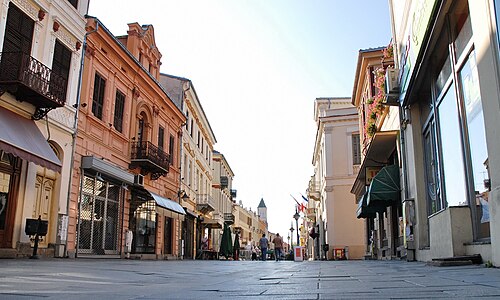
Bitola, a city located in the southwestern part of North Macedonia, is known for its rich history, diverse cultural heritage, and strategic location near the borders of Greece and Albania. Situated at the foot of the Baba Mountain, Bitola lies in the Pelagonija valley and serves as a key economic and cultural center in the region. With a population of approximately 74,000 people, it is the second-largest city in the country. Bitola's history dates back to ancient times when it was known as Heraclea Lyncestis, a site founded in the 4th century BC by Philip II of Macedon. The remnants of this ancient town, including well-preserved mosaics and ruins of Roman theaters, draw tourists and historians alike, reflecting the city's significance throughout various historical periods.
The city is characterized by its charismatic architecture, featuring a blend of Ottoman, neoclassical, and modern styles. The presence of numerous historical buildings, such as the Yeni Mosque, the Church of St. Demetrius, and the Clock Tower, showcase its multicultural past. Bitola has also been an important center for education, being home to the first modern school in Macedonia established in the 19th century, and it continues to foster higher education with several institutions, including the University of Bitola. Furthermore, the city's vibrant bazaars, traditional cafes, and annual festivals, such as the Bitola Carnival and the Bitola Film Festival, illustrate its ongoing cultural engagement. Surrounded by picturesque landscapes, Bitola serves as a gateway for outdoor enthusiasts looking to explore the nearby National Park Pelister, known for its stunning biodiversity and scenic hiking trails. In essence, Bitola is a city where history meets contemporary culture, making it a unique destination in North Macedonia.
Facts about Bitola
- Bitola is known as the 'City of Consuls' due to the presence of numerous foreign consulates in the late 19th and early 20th centuries, reflecting its importance as a trade and communication hub.
- The city hosts the ancient site of Heraclea Lyncestis, an archaeological site with well-preserved Roman ruins and stunning mosaics dating back to the Hellenistic period.
- Bitola is home to the iconic Širok Sokak, a long pedestrian street lined with historical buildings, cafes, and shops, which serves as the city's main social and cultural promenade.
- The Bitola International Documentary and Short Film Festival is one of the oldest film festivals in the country, promoting documentary filmmaking and offering a platform for local and international filmmakers.
- Bitola's Clock Tower, built in the 16th century, is not only a symbol of the city but also one of the few remaining Ottoman-era structures that represent the city's historical significance in the region.
- The city has a rich military history and was a key site during various Balkan Wars, with numerous military cemeteries, including the notable British Military Cemetery, showcasing its heritage.
- Bitola is known for hosting the annual 'Bitola Summer Festival', which features various cultural events, including music performances, theater shows, and art exhibitions, celebrating local and international artists.
- The city is renowned for its wine production, particularly from the surrounding Tikveš region, known for its high-quality red and white wines, contributing to North Macedonia's export economy.
- Bitola is also a cultural hub, home to the National Theatre, which hosts numerous performances and events highlighting the region's vibrant artistic community.
- The city is famous for its unique architecture, combining Ottoman, Austro-Hungarian, and Mediterranean influences, making it a visually distinct locale compared to other cities in North Macedonia.