Bletchley, United Kingdom
- 50,193 people
- 16 places to visit
- 52.0022, -0.7501
Places to Visit (16)
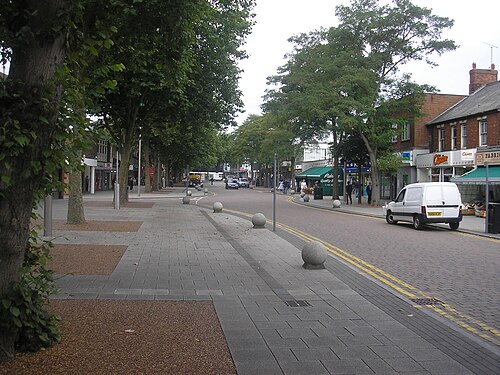
Bletchley is a town located in the Milton Keynes district of Buckinghamshire, England, approximately 50 miles northwest of London. Known for its rich history, Bletchley gained prominence during World War II as the site of Bletchley Park, the central location for British codebreakers who worked to decipher the encrypted messages used by the Axis powers. This historic site played a crucial role in the development of early computing technology, as notable figures like Alan Turing and his colleagues utilized advanced mathematical techniques and electromechanical devices to crack codes such as the Enigma machine. Post-war, Bletchley Park evolved into a museum, showcasing its pivotal contributions to both the war effort and the field of computing.
The town itself has transformed over the years, transitioning from a rural village into a bustling urban area as part of the new city of Milton Keynes, which was established in the 1960s. This development led to increased housing and infrastructure, making Bletchley a desirable location for commuters to London and other nearby cities. Bletchley boasts various amenities, including schools, parks, and shopping areas, which cater to its growing population. The blend of historical significance with modern development makes Bletchley a unique area, reflecting both its past and its evolution into a contemporary town. Today, visitors are drawn to the well-preserved Bletchley Park, where they can explore exhibitions related to wartime codebreaking, British history, and the evolution of technology. Bletchley continues to be an integral part of the United Kingdom's narrative, balancing its historical heritage with ongoing developments in urban life.
Facts about Bletchley
- Bletchley is best known for being home to Bletchley Park, the site of British codebreaking during World War II, where significant advancements in cryptography were made.
- The town played a crucial role in breaking the Enigma code, which was vital to the Allied forces' success in the war, and is often regarded as a birthplace of modern computing.
- Bletchley Park is now a museum dedicated to the legacy of codebreaking and the achievements of figures like Alan Turing and other mathematicians and engineers.
- The term 'Bletchley One' was used during the war to refer to the British codebreaking effort as a whole, highlighting its centrality to national intelligence operations.
- Bletchley has a rich historical heritage, with buildings dating back to the 16th century, including St. Mary's Church which showcases stunning Gothic architecture.
- The town has a diverse community and has seen significant expansion since the 1960s, transitioning from a small village to a bustling suburban town.
- Bletchley is part of the Milton Keynes urban area, known for its grid road system, modern housing developments, and green spaces, making it distinct from other cities in the UK.
- The Bletchley railway station, opened in 1838, serves as a historical landmark and is a critical link in the rail network connecting the town to London and other major cities.
- Bletchley is also famous for the annual Bletchley Park Arts and Science Festival, which celebrates the town's legacy in science, technology, and arts.
- The town has hosted numerous events and exhibitions that delve into the history of computing and codebreaking, attracting visitors from around the world to learn about its unique contributions.