Boma, DR Congo
- 297,009 people
- 1 places to visit
- -5.8396, 13.0703
Places to Visit (1)
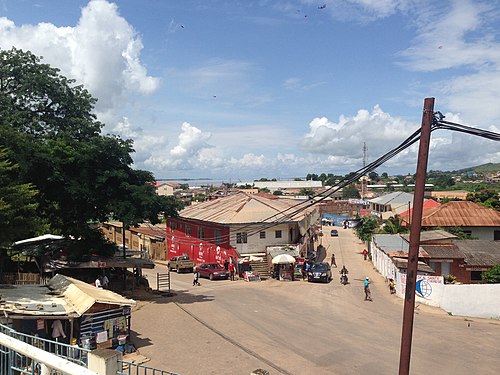
Boma is a significant city located in the southwestern region of the Democratic Republic of the Congo (DR Congo), serving as the capital of the Bas-Fleuve Province. Situated at the confluence of the Congo River and the Atlantic Ocean, Boma has historically been an important port city, facilitating trade and transportation both domestically and internationally. The city has a population of approximately 200,000 residents, predominantly composed of ethnic groups such as the Kongo people. Boma's strategic location has made it a vital hub for maritime activities, playing a crucial role in the economic development of the region.
The city's economy is largely driven by its port, which is one of the main gateways for goods entering and leaving the interior of the country. Boma's port facilitates the export of various resources, including timber, agricultural products, and minerals. The agricultural sector is significant, with local farmers cultivating crops like cassava, maize, and rice, which contribute to the local food supply as well as to trade. Despite its economic potential, Boma faces several challenges, including inadequate infrastructure, limited access to clean water, and ongoing issues related to governance and public services.
Culturally, Boma reflects a rich history that dates back to its establishment as a European trading post in the late 19th century. This heritage is evident in its architecture, local customs, and traditions. The city is known for its vibrant marketplace and lively community life, where local artisans and vendors showcase their crafts and goods. With a blend of traditional Kongo culture and modern influences, Boma is also home to various educational institutions and community organizations. Efforts have been made to enhance community development and promote tourism, capitalizing on the city's historical significance and natural beauty. Despite the challenges it faces, Boma remains an essential part of DR Congo's socio-economic fabric and continues to adapt and evolve in the changing landscape of the region.
Facts about Boma
- Boma is located on the Congo River and was historically the main port for the western region of the Democratic Republic of Congo.
- The city served as the capital of the Congo Free State from 1886 until 1908, highlighting its historical importance during colonial times.
- Boma is known for its unique architecture that includes a mix of colonial-era buildings and modern structures, which reflects its diverse history.
- The city is home to the historic site of Fort de Boma, a 19th-century fortification that played a significant role in the defense against colonial incursions.
- Boma houses the famous 'Square de l'Indépendance', which commemorates the independence of the Democratic Republic of Congo from Belgian rule.
- The city is recognized for its vibrant cultural scene, which includes traditional music, dance, and festivals that showcase the local heritage.
- Boma is situated near the mouth of the Congo River, making it a crucial point for maritime trade and fishing activities.
- The city has a significant population of the Bakongo people, who have a rich cultural tradition that influences the local customs and practices.
- Boma's landscape is distinguished by both its lush greenery and proximity to the ocean, providing unique ecological diversity compared to many other Congolese cities.
- The city was also the site of the first official document of the Belgian Congo in 1885, marking its role in the early administrative history of the country.