Bonn, Germany
- 330,579 people
- 19 places to visit
- 50.7374, 7.0982
Places to Visit (19)
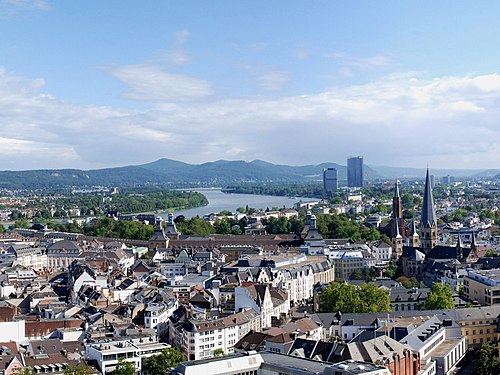
Bonn is a vibrant city located in the western part of Germany, along the banks of the Rhine River. Known for its remarkable history and cultural significance, Bonn was established around the Roman settlement of Bonna and served as the capital of West Germany from 1949 until the reunification of Germany in 1990. The city is renowned for its beautiful architecture, combining both historic and modern elements, most notably the UNESCO World Heritage Site of the Poppelsdorf Palace and the Bonn Minster, a stunning Romanesque church dating back to the 11th century. The city's layout is characterized by charming streets, scenic parks, and picturesque river views, making it a popular destination for both tourists and locals.
As a center of politics and diplomacy, Bonn hosts numerous international institutions and organizations, including the United Nations Framework Convention on Climate Change (UNFCCC) and the German Aerospace Center. This status is complemented by a rich academic tradition, highlighted by the presence of the University of Bonn, founded in 1818, which is one of Germany's oldest and most prestigious universities. The city also has a notable association with the famous composer Ludwig van Beethoven, who was born here in 1770. The Beethoven-Haus, his birthplace, is now a museum celebrating his life and works. Cultural events, such as the Bonn Beethoven Festival and various art exhibitions, showcase the city’s commitment to the arts and promote its rich musical heritage.
Bonn has a diverse population and a strong economy, benefiting from its proximity to larger cities like Cologne and Düsseldorf. Its efficient public transport system allows easy access to these metropolitan areas, making Bonn an attractive place for both residents and businesses. The city offers a high quality of life with a blend of green spaces, educational institutions, and cultural venues, including theaters, museums, and galleries. The Bonn Christmas Market, held annually, draws visitors from around the region, showcasing local crafts and seasonal delicacies. Overall, Bonn successfully integrates its historical roots with modern development, maintaining a unique identity that continues to evolve in contemporary Germany.
Facts about Bonn
- Bonn is the birthplace of the famous composer Ludwig van Beethoven, and his home is now a museum dedicated to his life and works.
- The city served as the capital of West Germany from 1949 until reunification in 1990, making it a significant political center during the Cold War.
- Bonn is host to several important international organizations, including the United Nations Framework Convention on Climate Change (UNFCCC) headquarters.
- The Bonner Altstadt (Old Town) features stunning Baroque architecture, notably the Bonn Minster, one of the oldest churches in Germany.
- Bonn is known for the annual Beethovenfest, a major music festival celebrating Beethoven’s contributions to classical music with performances and events.
- The city features the Poppelsdorf Palace and its beautiful botanical gardens, which are part of the University of Bonn, one of Germany's oldest universities.
- Bonn is located along the Rhine River, offering picturesque waterfront promenades and opportunities for river cruises and recreational activities.
- Every September, Bonn hosts the 'Bonn Marathon,' which attracts runners from around the world to compete in various race categories.
- The city is home to the Haus der Geschichte (House of History), a museum dedicated to the contemporary history of Germany, uniquely focusing on post-1945 developments.
- Bonn has a unique dual character as a university city and a hub for many international and governmental organizations, contributing to its multicultural atmosphere.