Botoşani, Romania
- 114,783 people
- 10 places to visit
- 47.7407, 26.6658
Places to Visit (10)
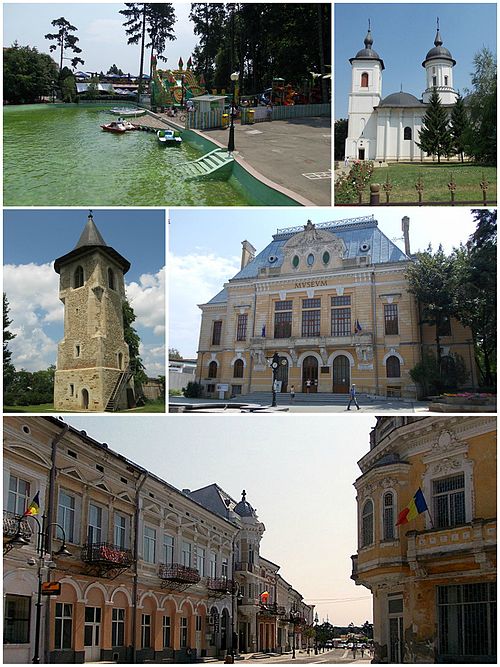
Botoşani is a city located in northeastern Romania, serving as the capital of Botoșani County. With a rich history that dates back to ancient times, it was first documented in 1439, and it has since evolved into an important cultural and economic center in the region. The city is situated in the historical region of Moldavia, near the border with Ukraine, and it is characterized by its strategic position along several trade routes. Botoşani has a population of approximately 100,000 inhabitants and is known for its vibrant community and local traditions.
Botoşani is home to numerous historical and cultural landmarks that reflect its diverse heritage. Among these is the Botoșani Museum of History and Ethnography, which showcases artifacts and exhibits that highlight the city's evolution through different eras. The city also hosts several churches and monuments, including the 17th-century St. George Church, renowned for its stunning architecture and frescoes. Additionally, Botoşani has a significant literary heritage; it was the birthplace of influential Romanian writers such as Mihai Eminescu, often regarded as Romania's national poet. The city celebrates its literary legacy through various cultural events and festivals.
The economy of Botoşani has traditionally been based on agriculture, but it has diversified over the years to include various industries such as textiles, food processing, and manufacturing. The city features a mix of modern amenities and traditional markets, where local products and crafts can be found. Botoşani is well-connected by road and rail, facilitating travel and commerce in the region. As the city continues to develop, it retains its charm through its historical sites and the warmth of its community, making it a notable destination for those interested in exploring the cultural landscape of Romania.
Facts about Botoşani
- Botoşani is one of the oldest towns in Romania, with historical records dating back to the 14th century.
- The city is known for its rich cultural heritage and is considered the birthplace of several notable Romanian writers, including Mihai Eminescu, who is regarded as the national poet of Romania.
- Botoşani is home to the Saint George's Church, a notable historical monument that showcases a unique architectural style combining Byzantine and Gothic elements.
- The city hosts an annual festival dedicated to Mihai Eminescu, celebrating his life and contribution to Romanian literature, which attracts visitors from across the country.
- Botoşani has a vibrant local tradition of crafts and folk arts, including pottery and weaving, distinct from many other areas in Romania.
- The city played a significant role in the early political landscape of Romania, serving as a site for various important events leading to the country's unification.
- Botoşani's central square, Unirii Square, features a unique mix of architectural styles, reflecting its historical development and cultural influences over the centuries.
- The Botoşani County is known for its rich agricultural production, particularly in sunflowers and maize, making it an important agricultural hub in Romania.
- The city's proximity to the Prut River has also historically made it a strategic economic center for trade and transport.
- Botoşani features the only functioning wooden theater in Romania, the Mihai Eminescu Theater, which showcases local talent and traditional performances.