Bozhou, China
- 1,409,436 people
- 5 places to visit
- 33.8446, 115.7793
Places to Visit (5)
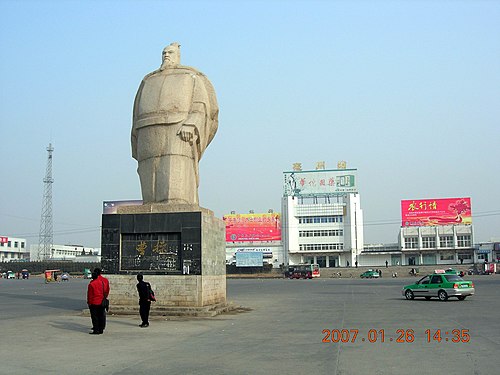
Bozhou is a prefecture-level city located in the Anhui province of China. Known for its rich cultural heritage and historical significance, Bozhou lies in the central part of the province, bordered by the cities of Huainan to the east, and Lu'an to the south. The city is strategically positioned about 140 kilometers from Hefei, the provincial capital, making it an important hub for commerce and transportation. Bozhou has a population of approximately 1.6 million residents and spans an area of around 4,500 square kilometers. It is characterized by a mixed economy, with agriculture, commerce, and manufacturing playing significant roles in its development.
Historically, Bozhou is recognized for its contributions to traditional Chinese medicine, particularly in the production of Chinese herbs and medicinal materials. The city is often referred to as the "Home of Traditional Chinese Medicine" due to its extensive cultivation and processing of medicinal plants. Over the years, Bozhou has developed a reputation for the "Bozhou International Trade Fair for Chinese Medicine," which attracts participants from across the globe, showcasing the city's dedication to promoting traditional practices and products. Besides its medicinal heritage, Bozhou also boasts several cultural landmarks, including ancient temples, traditional streets, and historical relics that reflect its long history and the blending of various cultural influences.
In recent years, Bozhou has focused on modernization and urban development, improving infrastructure to support its growing economy and enhance the quality of life for its residents. The city has made significant investments in transportation, education, and healthcare, aiming to create a balanced urban environment that respects its rich history while embracing modernity. This approach has led to an increase in tourism, as visitors are drawn to its blend of traditional and contemporary attractions. With its historical roots and forward-looking initiatives, Bozhou is emerging as an influential city within Anhui province, contributing both economically and culturally to the region.
Facts about Bozhou
- Bozhou is renowned for its historic contributions to Chinese medicine, being home to traditional Chinese medicine schools and a wealth of herbal remedies.
- It is known as the 'Capital of Chinese Medicine', featuring a traditional Chinese medicine market that attracts practitioners and patients from across the country.
- Bozhou is famous for the 'Bozhou International Antique Fair', one of the largest antique fairs in China, showcasing antiques, art, and various cultural artifacts.
- The city is located at the junction of the ancient Huaihe River and the modern transportation network, making it a strategic point for trade since ancient times.
- Bozhou has a rich cultural heritage, with numerous ancient temples, pagodas, and historical sites, including the famous Xuanzang Temple dedicated to the Buddhist monk Xuanzang.
- The city is also known for its unique Bozhou Opera, which is a local form of traditional Chinese opera, reflecting the regional culture and history.
- Bozhou hosts the annual 'Bozhou International Chinese Medicine Health Culture Festival', promoting traditional health practices and modern medical advancements.
- The area around Bozhou has many ancient archaeological sites, including the ruins of the Huai River civilization, which date back thousands of years.
- Bozhou is distintive for its role in the production of high-quality ceramics, particularly the 'Bozhou porcelain' which is sought after for its craftsmanship.
- The city has been making advancements in modern agriculture, particularly in the cultivation of traditional Chinese medicinal herbs, contributing to both local and global markets.