Brasília, Brazil
- 2,207,718 people
- 16 places to visit
- -15.7975, -47.8919
Places to Visit (16)
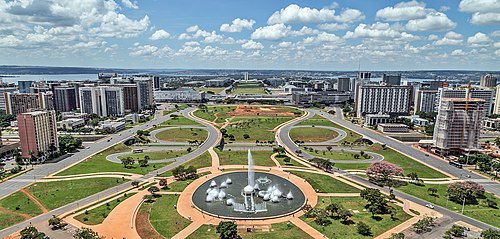
Brasília, the capital of Brazil, is a planned city that was officially inaugurated on April 21, 1960. Designed by the Brazilian architect Oscar Niemeyer and urban planner Lúcio Costa, Brasília was developed to promote the interior's development and reduce the concentration of political and economic power in coastal cities like Rio de Janeiro and São Paulo. The city is distinctive for its modernist architecture, featuring iconic structures such as the National Congress of Brazil, the Presidential Palace (Palácio da Alvorada), and the Cathedral of Brasília. Recognized as a UNESCO World Heritage Site in 1987, Brasília is celebrated for its innovative urban planning and distinctive layout shaped like an airplane when viewed from above.
Positioned in the highlands of central Brazil, Brasília is known for its unique climate, classified as tropical savanna, with a marked wet and dry season. The city has a population of over 3 million residents, making it the fourth largest city in Brazil. Brasília's urban environment is characterized by expansive green spaces and parklands, including the vast Brasília National Park, which juxtaposes its monumental buildings. The city is also a hub for Brazilian cultural, political, and economic activities, housing various governmental institutions, embassies, and numerous public services. Its diverse population has contributed to a vibrant cultural scene, reflected in various festivals, museums, and art galleries throughout the city. Ultimately, Brasília stands as a symbol of modernist innovation and Brazil's aspirations for internal development, embodying both the challenges and successes of a rapidly urbanizing nation.
Facts about Brasília
- Brasília is the capital city of Brazil, officially inaugurated on April 21, 1960, with the aim of promoting the development of the interior of the country.
- The city was designed by the Brazilian architect Oscar Niemeyer and the urban planner Lúcio Costa, making it an exemplary model of modernist architecture.
- Brasília was built in just 41 months, a rapid construction project that involved significant logistical challenges and urban planning innovations.
- The city is laid out in the shape of an airplane or bird when viewed from above, with sectors designated for specific purposes, such as housing, commerce, and governance.
- The Palácio da Alvorada, the official residence of the President of Brazil, is a notable example of Niemeyer's architectural style and symbolizes the country's political power.
- Brasília was designated a UNESCO World Heritage Site in 1987 due to its unique architecture and urban planning, highlighting its cultural significance.
- The city features vast green spaces, including parks and natural reserves, unlike many other urban areas in Brazil that suffer from overcrowding and urban sprawl.
- The National Congress of Brazil, with its distinctive dome and bowl-shaped towers, serves as a landmark and the center of the Brazilian legislative branch.
- The city's design includes wide avenues and a grid layout, which is unusual for Brazilian cities that typically have more chaotic street patterns.
- Brasília hosts several major events, including the annual Festival do Japão, showcasing the city's cultural diversity and international connections.