Braunschweig, Germany
- 244,715 people
- 15 places to visit
- 52.2678, 10.5246
Places to Visit (15)
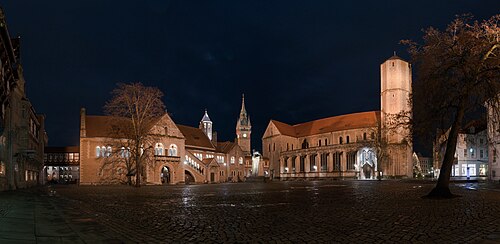
Braunschweig, also known as Brunswick in English, is a city located in Lower Saxony, Germany. It lies in the central part of the country, approximately 60 kilometers southeast of Hanover. With a population of around 250,000 inhabitants, Braunschweig is one of the largest cities in the region and serves as an important economic and cultural hub. The city has a rich history dating back over a thousand years, being first mentioned in records in 1031. Historically, Braunschweig was a significant center for trade and commerce, particularly during the Middle Ages, when it became part of the Hanseatic League. Its strategic location contributed to its development into a prosperous city known for its vibrant market economy.
The architectural landscape of Braunschweig is marked by a blend of historic and modern structures. Noteworthy landmarks include the reconstructed Dankwarderode Castle, which dates back to the 11th century, and the impressive St. Blasius Cathedral, known for its distinctive Romanesque style. The city also features the richly decorated Braunschweig’s Lion, a symbol of the city, and several other medieval buildings that reflect its historical significance. In addition to its historical sites, Braunschweig is home to numerous educational institutions and research facilities, including the Technical University of Braunschweig, one of the oldest technical universities in Germany, established in 1745. This academic environment fosters innovation and contributes to the city's reputation for engineering and technology.
Braunschweig is also known for its cultural scene, hosting various events, festivals, and exhibitions throughout the year. The city boasts several museums, such as the Herzog Anton Ulrich Museum, which houses an extensive collection of European art, and the natural history-focused Naturhistorisches Museum. The local cuisine reflects the area's traditions, featuring hearty dishes, often centered around meat and potatoes, with local specialties like the Braunschweiger beer and the popular bratwurst. Additionally, Braunschweig's numerous parks and green spaces enhance its quality of life, inviting residents and visitors to enjoy outdoor activities. Overall, Braunschweig is a city that combines a rich historical heritage with modern educational and cultural dynamics, making it an intriguing destination in Germany.
Facts about Braunschweig
- Braunschweig is known for its rich history and was a key center of the medieval Hanseatic League, which distinguished it as a significant trading hub.
- The city is home to the landmark Burgplatz, featuring the iconic Dankwarderode Castle and the impressive Cathedral of St. Blasius, showcasing unique architectural styles.
- Braunschweig hosts the annual 'Braunschweig International Film Festival', one of the oldest film festivals in Germany, highlighting its vibrant cultural scene.
- With a history dating back over 1,000 years, Braunschweig was the childhood home of the renowned thinker and philosopher, Gottfried Wilhelm Leibniz.
- The city has a unique local breed of cattle known as 'Braunschweiger', which is recognized for its quality meat and has agricultural significance.
- Braunschweig boasts the 'Wassertor', a medieval water tower that is one of the best-preserved examples of town fortifications in Germany.
- The city is home to the Technische Universität Braunschweig, founded in 1745, making it one of the oldest technical universities in the country and fostering innovation.
- During the 19th and 20th centuries, Braunschweig was an important center for the car industry, including the birthplace of famous automobile brands such as the Biondetti and models like the B 200.
- The city celebrates its unique history with the 'Braunschweig Carnival', one of the largest and oldest carnivals in northern Germany, attracting thousands of participants each year.
- Braunschweig was heavily bombed during World War II but has since preserved many of its historical buildings, making it a blend of old and modern architecture unlike many other German cities.