Brindisi, Italy
- 87,141 people
- 17 places to visit
- 40.6328, 17.9419
Places to Visit (17)
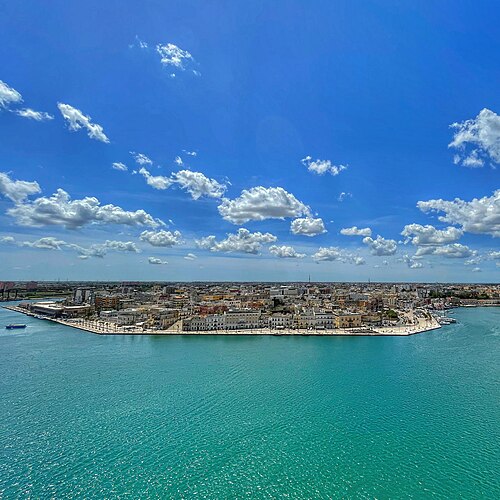
Brindisi is a port city located in the Apulia region of southeastern Italy, facing the Adriatic Sea. It is the capital of the province of Brindisi and has a rich history that spans over two millennia. The city's origins can be traced back to ancient times, specifically as a significant Greek settlement known as Brindisium. It became an important center for trade and naval power, particularly during the Roman Empire when it served as a crucial stop for ships traveling between Rome and the East. The city's strategic location made it a vital hub for commerce and military operations throughout various historical periods, including the Middle Ages and the Renaissance.
Brindisi's historical architecture reflects its diverse past, featuring numerous landmarks that showcase its cultural heritage. Among the most notable sites is the Roman Column, which marks the end of the ancient Via Appia, a major Roman road. The city is home to the Swabian Castle, built by Frederick II in the 13th century, which demonstrates the influence of Norman and Swabian architecture. Additionally, the Cathedral of Brindisi, dedicated to Saint John the Baptist, is an important religious site that exemplifies Romanesque and Baroque styles. The charming old town, with its narrow streets and vibrant piazzas, invites visitors to explore local shops, cafes, and restaurants that serve traditional Apulian cuisine, especially seafood and olive oil, which are integral to the region's culinary identity.
In contemporary times, Brindisi remains an important economic center, particularly due to its port, which facilitates both commercial shipping and ferry services to Greece and Albania. The city also hosts an international airport, making it accessible to travelers from various parts of Europe. Brindisi's economy benefits from agriculture, manufacturing, and tourism, with a growing interest in the natural beauty of the surrounding region, which includes beaches and the nearby Salento area, famous for its picturesque landscapes and historic villages. Overall, Brindisi is a city that successfully blends its rich historical legacy with modern aspirations, making it a unique destination in Italy.
Facts about Brindisi
- Brindisi is historically known as the 'Gateway to the East' due to its role as a significant port for trade and military operations during the Roman Empire.
- The city is home to the Roman Column, an ancient monument that once marked the end of the Appian Way, symbolizing the gateway to the Eastern Roman provinces.
- Brindisi features the Aragonese Castle, a 15th-century fortress built by the Aragonese to protect the city from invaders and pirates.
- The Cathedral of Brindisi, dedicated to St. John the Baptist, is notable for its unique blend of Romanesque and Baroque architectural styles and its historical significance dating back to the 11th century.
- Brindisi hosted significant historical events, including the signing of the Treaty of Brindisi in 1333, which was part of the peace negotiations between the Kingdom of Naples and the Kingdom of Sicily.
- The city is famous for its vibrant local cuisine, particularly its seafood dishes, as well as traditional Puglian dishes like orecchiette pasta.
- Brindisi is a key transit hub for ferry services to Greece and Albania, making it an essential connection point between Italy and the Balkans.
- The city celebrates the 'Festività di San Teodoro' in February, which features traditional processions and religious events, reflecting its deep-rooted cultural heritage.
- Brindisi has one of the Mediterranean's oldest archaeological sites, including the remains of the Roman amphitheater and ancient temples.
- The Brindisi International Airport serves as a major gateway for travelers heading to the beautiful beaches of the Salento region, known for its crystal-clear waters and coastal landscapes.