Budapest, Hungary
- 1,741,041 people
- 20 places to visit
- 47.4979, 19.0402
Places to Visit (20)
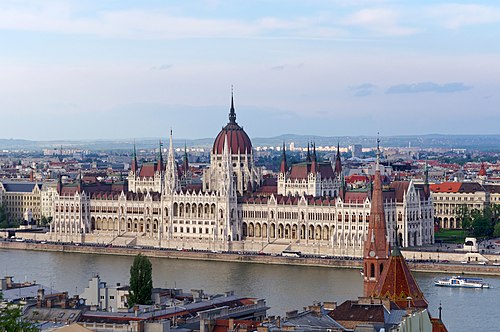
Budapest, the capital city of Hungary, is a vibrant metropolis situated at the confluence of the Buda and Pest sides of the Danube River. With a population of approximately 1.75 million, it is the most populous city in Hungary and serves as the country's political, cultural, and economic hub. Its rich history dates back to Roman times, and the city has evolved through various periods, including the Ottoman occupation and the Habsburg monarchy. Budapest became a significant urban center in the Austro-Hungarian Empire, which helped shape its architectural landscape, seen in landmarks like the Parliament Building, the Buda Castle, and the Chain Bridge, all exemplifying a blend of neoclassical and Gothic styles.
The city is renowned for its thermal baths, a legacy of both Roman and Turkish influences, with places like Széchenyi and Gellért attracting visitors for their restorative properties. Budapest is also famous for its vibrant arts scene, with numerous theaters, galleries, and museums, such as the Hungarian National Museum and the Museum of Fine Arts. The city's cultural life is enriched by its numerous festivals, including the Budapest Spring Festival and the Sziget Festival, which attract international attention. Furthermore, Budapest has a thriving gastronomic landscape, where traditional Hungarian cuisine can be savored alongside innovative culinary experiences, particularly in the city's ruin bars, which blend history and modernity. With its stunning scenery, rich heritage, and dynamic contemporary culture, Budapest stands as one of Europe’s most captivating destinations.
Facts about Budapest
- Budapest is the capital city of Hungary and is divided into two main parts, Buda and Pest, which are separated by the Danube River.
- The Buda Castle, a UNESCO World Heritage site, dates back to the 13th century and offers panoramic views of the city.
- The Hungarian Parliament Building, located on the Pest side, is the largest parliament building in Europe and features stunning Gothic Revival architecture.
- Budapest is famous for its thermal baths, with the Széchenyi Thermal Bath being one of the largest and most popular in Europe.
- The city is home to the Chain Bridge, which was the first permanent bridge to connect Buda and Pest, completed in 1849.
- Budapest has the second-oldest metro system in the world, which was opened in 1896, making it a significant part of the city's transportation history.
- The Heroes' Square in Budapest celebrates the history of Hungary and features the iconic Millennium Monument, constructed in 1896.
- The city hosts the annual Sziget Festival, one of Europe’s largest music and cultural festivals, attracting thousands of visitors each year.
- The Central Market Hall in Budapest is one of the largest and oldest indoor markets in Hungary, famous for its local produce and traditional foods.
- Budapest is known as the 'City of Spas' due to its numerous thermal springs and wellness facilities, attracting visitors looking for relaxation and health benefits.