Burnley, United Kingdom
- 149,422 people
- 18 places to visit
- 53.7893, -2.2405
Places to Visit (18)
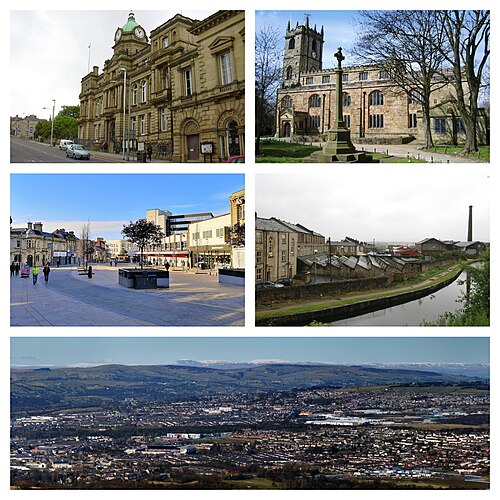
Burnley is a town located in Lancashire, England, with a rich industrial heritage and a vibrant community. Historically a center for the textile industry during the Industrial Revolution, Burnley became known for its production of cotton, which significantly contributed to Britain's economic growth. By the 19th century, the town had transformed from a predominantly agrarian society to a bustling industrial hub, with numerous mills and factories dotting the landscape. The decline of the textile industry in the mid-20th century led to economic challenges, but Burnley has since diversified and revitalized its economy, shifting towards sectors such as retail, education, and technology.
Geographically, Burnley is situated on the edge of the Pennines, providing a scenic backdrop with lush valleys and hills, which enhances its appeal to residents and visitors alike. The town is well-connected by road and rail, making it accessible for commuting to larger cities like Manchester and Liverpool. Burnley's cultural landscape is marked by a mixture of historical and contemporary sites, including the iconic Town Hall, which showcases Victorian architecture, and the locally revered Towneley Hall, a historic house and museum set within beautiful parkland. The town hosts various annual events and festivals that celebrate its diverse community and heritage, fostering a strong sense of local identity.
In addition to its historical and cultural attributes, Burnley also boasts a commitment to environmental sustainability and community engagement. The town has implemented various initiatives aimed at enhancing green spaces and promoting active lifestyles, with numerous parks, walking trails, and cycling paths. Burnley’s football club, Burnley F.C., is a source of local pride, having experienced both Premier League and Championship play. Overall, Burnley is a town characterized by its resilience, community spirit, and continuous adaptation, making it a noteworthy location within the United Kingdom.
Facts about Burnley
- Burnley was a significant center of the textile industry during the Industrial Revolution, particularly known for cotton production.
- The town is home to the only surviving original operational weave shed in the UK, Queen Street Mill, now a museum dedicated to the cotton industry.
- Burnley has a strong football heritage and is the home of Burnley Football Club, one of the oldest professional football clubs in the world, founded in 1882.
- The 1968 Burnley by-election was notable for being the first parliamentary election in the UK to have a man of Nigerian descent, representing the Conservative party.
- Burnley features the historic Towneley Hall, a magnificent example of a 14th-century manor house that now serves as a museum and art gallery.
- The town is known for the Burnley Canal, which is part of the larger network of the Leeds and Liverpool Canal and was crucial for transporting coal and textiles during its heyday.
- Burnley hosted the first-ever North West 10K run, which has become an annual event attracting participants from across the region.
- The local football club, Burnley FC, won the First Division title in 1921, which became a core part of the town's identity and pride.
- Burnley has an array of parks and green spaces, such as Thompson Park, which was designed by the famous landscape architect Thomas Mawson in the early 20th century.
- The town is associated with the 'Burnley Way', a series of walking trails that promote the natural surroundings and accessibility of the local countryside.