Busan, South Korea
- 3,678,555 people
- 9 places to visit
- 35.1017, 129.03
Places to Visit (9)
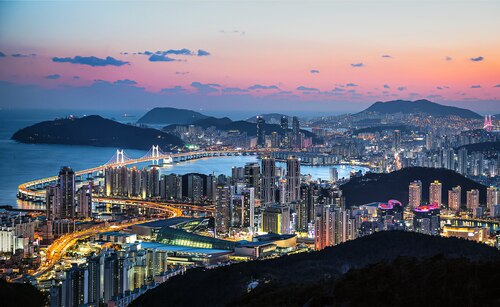
Busan, located on the southeastern coast of South Korea, is the country's second-largest city and a vital port. With a population of approximately 3.5 million people, Busan serves as a significant economic and cultural hub. The city is recognized for its beautiful beaches, lush mountains, and vibrant urban life. The Port of Busan is the busiest in South Korea and the sixth-busiest in the world, playing a crucial role in the nation's economy by facilitating maritime trade and logistics. The city's strategic location has made it an essential center for shipping, shipbuilding, and international business.
Busan is also renowned for its rich cultural offerings and natural beauty. The city's coastline features popular beaches such as Haeundae and Gwangalli, attracting tourists and locals alike for sunbathing, water sports, and festivals. The annual Busan International Film Festival, held every October, is a prominent event that showcases the best in contemporary cinema and elevates the city's international profile. In addition, Busan boasts a variety of cultural landmarks, including the ancient Beomeosa Temple nestled in the Geumjeongsan Mountain and the vibrant Gamcheon Culture Village, noted for its colorful houses and artistic vibe. The city’s blend of traditional and modern elements creates a unique atmosphere, offering visitors a glimpse into both Korea’s past and its dynamic present.
Transportation in Busan is well-developed, featuring a network of buses, subways, and a high-speed rail connection to Seoul, making the city easily accessible. The Busan Metro, with multiple lines, serves as the backbone of public transport within the city, connecting residents and visitors to key attractions. As a cosmopolitan center, Busan also hosts various international events and conferences, contributing to its status as a cultural melting pot. The city's rich food culture, highlighted by local specialties such as fresh seafood and traditional dishes like bibimbap, further enhances its appeal. With its combination of natural beauty, economic significance, and cultural vitality, Busan represents a unique and essential aspect of South Korea's identity.
Facts about Busan
- Busan is South Korea's second-largest city, known for its bustling port, which is the largest in the country.
- The city is famous for its beautiful beaches, with Haeundae Beach being one of the most popular destinations in South Korea.
- Busan hosts the annual Busan International Film Festival, one of Asia's most significant film festivals, attracting filmmakers and cinephiles from around the world.
- Unlike most other Korean cities, Busan has a unique mix of urban and natural landscapes, with mountains, rivers, and scenic coastlines all within close proximity.
- The city is home to the Jagalchi Fish Market, the largest seafood market in Korea, where visitors can experience the local culture through fresh seafood and traditional dishes.
- Busan's Gamcheon Culture Village is known for its colorful houses and artistic ambiance, often referred to as the 'Machu Picchu of Busan'.
- The Beomeosa Temple, located on the Geumjeongsan Mountain, is an important cultural and historical site showcasing traditional Korean architecture and Buddhist practices.
- Busan has a vibrant street food scene, with Gukje Market being a prominent location where visitors can sample a variety of local delicacies.
- The city's modern skyline is marked by the Busan Tower, which offers panoramic views and is located in Yongdusan Park, a favorite among both locals and tourists.
- Busan played a significant role during the Korean War, serving as a major hub for refugees and military operations, contributing to its historical importance.