Butuan, Philippines
- 309,709 people
- 9 places to visit
- 8.9475, 125.5406
Places to Visit (9)
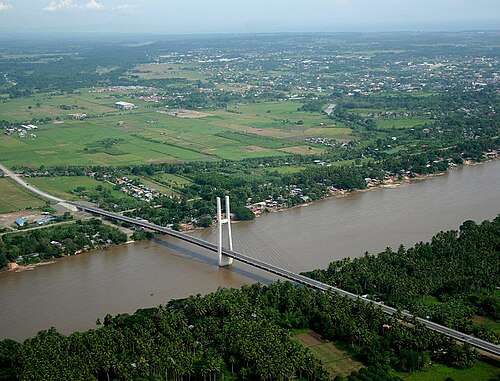
Butuan, a city located in the northeastern part of Mindanao, Philippines, serves as an administrative center of Agusan del Norte province. With a population of over 300,000 as of the 2020 census, Butuan is one of the important urban centers in the Caraga region. It is known for its rich history and cultural heritage, with archaeological evidence suggesting that it has been inhabited for thousands of years. The city is often referred to as the "Timber City of the South" due to its extensive logging industry, and it has also developed its agricultural and trade sectors over the years. The Agusan River, one of the longest rivers in the Philippines, flows through Butuan, enhancing its importance as a trading hub.
Butuan is a city steeped in history, which is evidenced by several archaeological sites, including the Butuan Ivory Seal and the Balangay boats, prehistoric watercraft that were discovered in the area. These findings indicate that Butuan was once a significant center for trade and commerce in Southeast Asia, with connections to various cultures and civilizations. The annual Balay Ni Mayang Festival celebrates the city's heritage, showcasing its history through various cultural performances and activities. Furthermore, Butuan is home to several sites of interest, including the Butuan National Museum, which houses artifacts that narrate the city’s past. The city's strategic location, rich natural resources, and cultural significance continue to make it an important destination in the Philippines, reflecting both its historical prominence and its potential for future growth.
Facts about Butuan
- Butuan is known as the 'Timber City of the South' due to its rich abundance of timber resources, which has historically driven its economy.
- The city is home to the Butuan Bay, where ancient boat-building traditions can be traced back over a thousand years, linking the area to early maritime trade in Southeast Asia.
- Butuan is famous for the discovery of the Butuan Man, one of the oldest human remains found in the Philippines, dating back to about 1000 BC, emphasizing its historical significance.
- The city is known for the Balanghai boats or Butuan boats, which are ancient wooden vessels that were significant in ancient trade and seafaring, representing the shipbuilding industry of the area.
- Butuan celebrates the annual Butuan Heritage Festival, which showcases its rich cultural history through indigenous music, dance, and the arts.
- The city is home to the National Museum of the Philippines - Butuan Branch, which houses artifacts and exhibits that depict the history and heritage of Butuan and Mindanao as a whole.
- Butuan played a critical role in the early spread of Christianity in the Philippines, as it was one of the first areas to be visited by Spanish explorers in the 16th century.
- The city is also the site of the ancient kingdom of Butuan, a prominent trading hub in pre-colonial Philippines, which was established as early as the 10th century.
- Butuan's archaeological sites, such as the Banaue Rice Terraces and the archaeological discoveries in the area, are evidence of its rich and dynamic history.
- Unlike many cities in the Philippines, Butuan has a unique geographical feature known as 'Agusan Marsh', a vast wetland area that serves as a diverse wildlife habitat and is crucial for biodiversity.