Cagliari, Italy
- 149,257 people
- 7 places to visit
- 39.2237, 9.1217
Places to Visit (7)
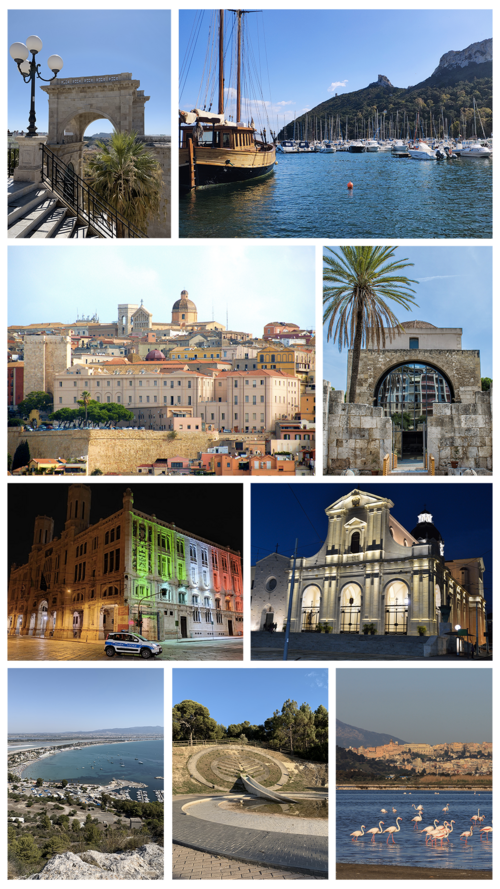
Cagliari, the capital city of the Italian island of Sardinia, boasts a rich history and vibrant culture that reflects its strategic importance in the Mediterranean. With a population of approximately 150,000 residents, Cagliari serves as the largest city in Sardinia and functions as an economic, political, and cultural hub for the region. Founded by the Phoenicians, the city has seen a multitude of rulers over the centuries, including the Romans, Byzantines, and Spanish, each of whom has left an indelible mark on its heritage. The historical quarter, known as Castello, sits atop a hill and features narrow cobblestone streets lined with ancient buildings, churches, and palaces, showcasing a blend of architectural styles that testify to Cagliari's diverse past.
Cagliari's geographical location along the southern coast of Sardinia is complemented by stunning natural beauty, set against a backdrop of hills and the inviting Mediterranean Sea. The city is well-known for its beautiful beaches, such as Poetto, which stretches for several kilometers and attracts both locals and tourists seeking sun and relaxation. Cagliari also serves as a gateway to explore the rich natural landscapes of Sardinia, featuring hiking trails, rugged coastlines, and unique geological formations. In addition to its natural attractions, the city is home to several important cultural institutions, including the Museo Archeologico Nazionale, which houses a comprehensive collection of artifacts from Sardinia’s ancient civilizations. The annual Festa di Sant'Efisio, a vibrant celebration honoring the patron saint of Cagliari, draws thousands of visitors and reflects the city's deep-rooted traditions and religious heritage.
The local cuisine is another integral aspect of Cagliari's identity, with a focus on fresh seafood, traditional Sardinian dishes, and local ingredients such as pecorino cheese and characteristic flatbread known as pane carasau. Food festivals and markets throughout the year celebrate these culinary delights, inviting both residents and tourists alike to experience Sardinian gastronomy. With a blend of historical charm, natural beauty, and rich cultural experiences, Cagliari stands out as a destination that encapsulates the essence of Sardinia, making it an appealing location for those seeking to explore the unique heritage of this Mediterranean paradise.
Facts about Cagliari
- Cagliari is the capital city of Sardinia, the second largest island in the Mediterranean Sea, distinguishing it from mainland Italian cities.
- The city is home to the ancient Roman amphitheater, which dates back to the 2nd century AD and is carved into the rock, showcasing Cagliari's rich historical heritage.
- Cagliari features a unique medieval quarter known as 'Castello,' characterized by narrow streets, ancient walls, and panoramic views of the surrounding landscape.
- The Poetto Beach in Cagliari stretches for over 8 kilometers and is famous for its stunning natural beauty, making it one of the longest urban beaches in Italy.
- Cagliari is known for its production of a variety of unique wines, including Vermentino and Carignano, which are specific to the region of Sardinia.
- The city hosts the famous Sagra di Sant'Efisio, one of the oldest and most important religious festivals in Sardinia, celebrated annually in early May.
- Cagliari has a unique mix of cultural influences, being a historic point of contact between various Mediterranean civilizations, including Phoenicians, Romans, and Byzantines.
- The city's Cagliari Marina is renowned for its vibrant seafood markets and eateries, offering some of the freshest catches in Italy, distinguishing it from other coastal towns.
- Cagliari's Nuraghe Santu Antine is one of the best-preserved examples of nuragic architecture, a Unesco World Heritage Site that reflects the island's prehistoric civilization.
- The Molentargius-Saline Regional Park in Cagliari is notable for its population of pink flamingos, making it one of the few urban areas in the world where these birds are regularly spotted.