Cajamarca, Peru
- 201,329 people
- 8 places to visit
- -7.1617, -78.5128
Places to Visit (8)
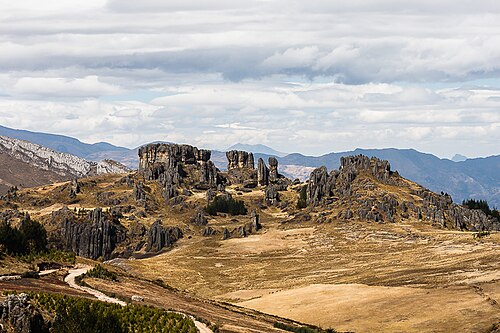
Cajamarca is a historical city located in the highlands of northern Peru. Known for its rich colonial architecture and significant cultural heritage, it serves as the capital of the Cajamarca region. The city is situated at an altitude of approximately 2,700 meters (8,858 feet) above sea level, which contributes to its unique climate, characterized by mild temperatures and a notable dry season. Cajamarca features a vibrant blend of Indigenous and Spanish influences, evident in its numerous churches, plazas, and colonial buildings. Key sites include the impressive Church of San Francisco and the Plaza de Armas, where locals gather for various cultural events and festivities throughout the year.
Cajamarca is historically significant for its role in the Spanish conquest of the Inca Empire. The city was the site of the famous capture of Inca Emperor Atahualpa by the Spanish conquistador Francisco Pizarro in 1532, an event that marked a pivotal moment in Peruvian history. Today, visitors can explore the Ransom Room (Cuarto del Rescate), where Atahualpa was held, as well as the nearby hilltop of Santa Apolonia, which offers panoramic views of the city and surrounding valley. The region is also renowned for its natural beauty, including hot springs such as Baños del Inca, which attract tourists seeking relaxation and wellness experiences. Additionally, Cajamarca celebrates a rich tradition of festivals, with Inti Raymi being one of the most notable, honoring the Inca sun god and showcasing vibrant local traditions through music, dance, and elaborate parades.
Economically, Cajamarca relies on agriculture, livestock, and mining, with the latter being a significant contributor to the region's economy due to the presence of underground mineral resources. The region is also known for its agricultural products, including dairy, potatoes, and grains. Cajamarca's cultural diversity is reflected in its gastronomy, which includes traditional dishes like "cuy chactado" (fried guinea pig) and "pachamanca" (a meat and vegetable dish cooked underground). As a destination rich in history and culture, Cajamarca continues to attract both national and international tourists, offering a glimpse into Peru's past and its vibrant present.
Facts about Cajamarca
- Cajamarca is famously known as the site of the last stand of the Inca Emperor Atahualpa against Spanish Conquistadors led by Francisco Pizarro in 1532, marking a significant event in Peruvian history.
- The city is home to the Ransom Room, where Atahualpa was held captive and offered a room full of gold and silver in exchange for his freedom, which ultimately led to Spanish control over the Inca Empire.
- Cajamarca features the impressive Cumbe Mayo archaeological site, which showcases ancient aqueducts and canals constructed by pre-Columbian cultures, distinct for their precise engineering.
- The city's climate is unique due to its high altitude (approximately 2,700 meters or 8,900 feet), giving it a mild climate compared to other highland areas in Peru, with a subtropical highland climate.
- Cajamarca is renowned for its rich cheese-making tradition, particularly the soft cheese known as 'Queso Helado,' which has gained popularity throughout the country.
- Each year, Cajamarca hosts the Carnival of Cajamarca, an exuberant festival characterized by parades, music, dancing, and water fights, attracting visitors from across Peru and beyond.
- The city is known for its historical architecture, including the Cathedral of Cajamarca, a baroque structure built atop Inca ruins, showcasing the blend of Spanish colonial and indigenous styles.
- Cajamarca is surrounded by a variety of natural thermal baths, such as the Baños del Inca, which offer therapeutic experiences and are tied to local legends about the Inca civilization.
- The Cajamarca region is one of Peru's main agricultural areas, particularly known for its production of potatoes and dairy, contributing significantly to the national economy.
- Cajamarca is also the birthplace of the 'Chicha de Jora,' a traditional fermented corn beverage that plays an important role in local culture and festivities.