Calais, France
- 74,433 people
- 12 places to visit
- 50.9516, 1.8613
Places to Visit (12)
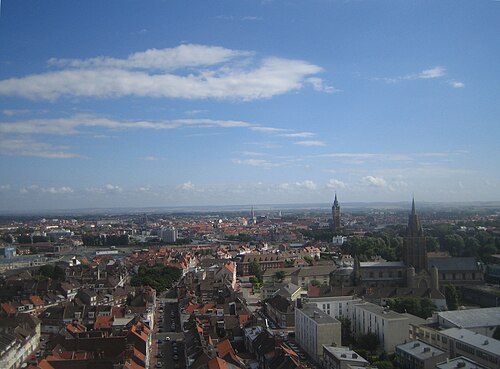
Calais is a coastal city in northern France, situated along the Strait of Dover, just across from England. It forms part of the Hauts-de-France region and is located in the Pas-de-Calais department. With a population of approximately 75,000 residents, Calais is a significant center for trade and transportation due to its strategic geographical position. Historically, it has served as a critical gateway between France and the UK, with its port being one of the busiest in the country. The city has long been known for its role in maritime trade and has adapted over the centuries, reflecting various cultural influences from both French and British identities.
The history of Calais is rich and varied, marked by its occupation and control by different powers. Initially, it gained prominence in the 13th century when it became part of the English crown, serving as a key stronghold during the Hundred Years' War. The city was retaken by France in 1558. Calais has been shaped by conflicts and rebuilding, which is evident in its architecture, including the iconic Calais Lighthouse, built in the 19th century, and the beautifully reconstructed town center following World War II devastation. Cultural attractions such as the Musée des Beaux-Arts, which houses an impressive collection of European art, and the annual Festival de la Côte d'Opale, celebrating music and arts, underscore Calais's vibrant community life.
In recent years, Calais has become known for its complex issues surrounding migration and refugee settlements, particularly due to its proximity to the English Channel. This has led to significant social challenges, with humanitarian organizations and local authorities working to provide aid and support for displaced individuals. The city remains committed to addressing these issues while promoting its historical and economic significance. Today, Calais continues to thrive as a vital hub for commerce and culture, boasting connections through rail and ferry services, making it a focal point for travelers and a noteworthy destination in the region.
Facts about Calais
- Calais is famous for its Lighthouse, which was completed in 1848 and stands 51 meters tall, making it a prominent navigational landmark.
- The city has a unique historical significance as the last English-held territory in France after the Hundred Years' War, remaining under English control until 1558.
- Calais is home to the Monument to the Heroes of the Great War, which commemorates the sacrifices of local soldiers during World War I.
- The city has a vibrant lace-making heritage, particularly known for its fine lace that dates back to the 16th century, often referred to as 'Dentelle de Calais.'
- Calais serves as a major ferry port, connecting France to the UK, and is one of the primary points for Channel crossings.
- The annual 'Calais Maritime Festival' celebrates the city's rich maritime history and culture with parades, exhibitions, and activities.
- Calais has a unique architectural style reflected in its grand Town Hall, which was built in the Flemish Renaissance style and is recognized as a UNESCO World Heritage Site.
- The Calais fabric industry, particularly the manufacturing of heavy textiles, played a vital role in the city's economy during the 19th and early 20th centuries.
- Calais is the closest French port to the UK, located just 34 kilometers across the English Channel, making it a key location for trade and transportation.
- The city has a multicultural aspect, largely due to its proximity to the UK, evidenced by the community of expatriates and ongoing interaction between British and French cultures.