Calama, Chile
- 165,731 people
- 6 places to visit
- -22.4544, -68.9294
Places to Visit (6)
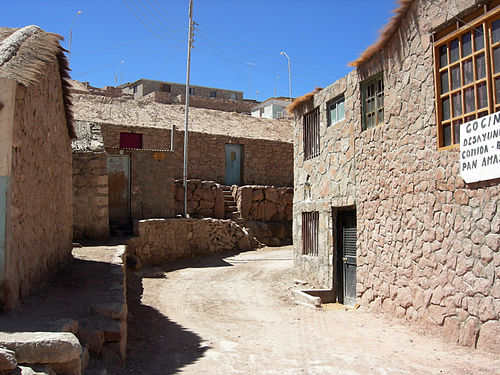
Calama is a city located in the northern part of Chile, within the Antofagasta Region. The city sits at an altitude of approximately 2,500 meters (8,200 feet) above sea level, making it one of the highest urban areas in the country. Calama was officially founded in 1883, primarily as a center for mining operations, and it has since grown into a vital economic hub due to its proximity to some of the world's largest copper mines, notably the Chuquicamata mine. This dominance in mining has significantly shaped the city’s development, attracting a population that primarily works in the mining and related industries. With a population of around 150,000 residents, Calama serves as a critical service and logistical center for the mining sector.
The climate in Calama is characterized as a desert climate, with extremely dry conditions and substantial temperature variations between day and night. Summers can be quite warm, while winters are cooler and marked by occasional frost. The city experiences very little rainfall, averaging about 3 millimeters per year, which contributes to its arid environment. Despite these challenges, Calama has developed an array of infrastructure facilities, including schools, healthcare services, and commercial areas, catering to its inhabitants. Furthermore, the city has seen efforts to enhance its urban landscape through various development projects aimed at improving the quality of life for its residents. In addition to its economic significance, Calama offers cultural experiences linked to the indigenous Atacameño people, with local festivals and traditions highlighting the region's historical richness. As a gateway to attractions such as the Valle de la Luna (Moon Valley) and the Altiplano, Calama also plays a role in tourism, drawing visitors keen to explore the stunning landscapes of the Atacama Desert.
Facts about Calama
- Calama is known as the gateway to the Atacama Desert, one of the driest places on Earth.
- The city is situated at an elevation of 2,260 meters (7,410 feet) above sea level, making it one of the highest cities in Chile.
- Calama is primarily recognized for its proximity to the Chuquicamata copper mine, one of the largest open-pit copper mines in the world.
- The city was established in the late 19th century, specifically in 1884, during the mining boom in the region.
- Calama has a unique cultural heritage influenced by both indigenous Atacameño traditions and the mining industry.
- The city hosts the annual 'Fiesta de Calama,' celebrating local culture and traditions with music, dance, and food.
- Calama's population has been significantly affected by fluctuating copper prices, which impacts both its economy and social landscape.
- The city's Plaza de Calama features a distinctive statue dedicated to the miners, honoring their contributions to the region's economy.
- Calama has a semi-arid climate, characterized by high temperatures during the day and much cooler nights, making its weather quite extreme.
- The town is known for the 'Cerro de la Cruz,' a viewpoint that offers a panoramic view of the city and the surrounding desert landscape.