Camborne, United Kingdom
- 22,500 people
- 17 places to visit
- 50.2128, -5.2948
Places to Visit (17)
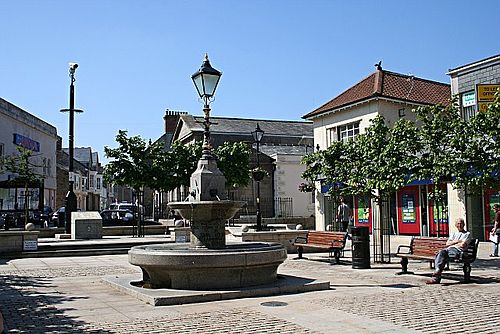
Camborne is a historical town located in Cornwall, England, known for its rich mining heritage and vibrant community. Situated approximately 9 miles southwest of Truro and 12 miles northeast of Penzance, Camborne is part of the Camborne-Redruth conurbation, which was once a major center of tin mining during the 19th century. The town's growth can be attributed to the burgeoning mining industry, which peaked in the mid-1800s, leading to significant population expansion and economic development. Today, Camborne remains a reminder of its mining past, with numerous historical buildings and monuments, including the iconic Camborne Hill and the former engine house sites that highlight the town's industrial legacy.
In addition to its mining history, Camborne offers a range of modern amenities and cultural opportunities. The town features several shops, cafes, and community spaces, creating a lively atmosphere for residents and visitors alike. Camborne is also known for its annual events, such as the Camborne Show and the town's festive celebrations, which draw in crowds from surrounding areas. The educational infrastructure includes primary and secondary schools, as well as the Camborne School of Mines, which continues to attract students interested in mining and engineering disciplines. Furthermore, Camborne is well-connected by transport links, including the A30 dual carriageway and a railway station on the Cornish main line, providing easy access to nearby towns and cities.
Culturally, Camborne embraces its Cornish identity, celebrating traditions such as Cornish music and dance. The town is also part of a larger region known for its stunning natural landscapes, with nearby beaches and moorland offering opportunities for outdoor activities. As an evolving town, Camborne skillfully balances its historical roots with a progressive approach to development, making it a unique destination that honors its past while embracing the future.
Facts about Camborne
- Camborne was a significant center for tin mining in the 19th century, notably one of the largest tin-producing areas in the world during that time.
- The town is home to the famous 'Camborne School of Mines', established in 1888, which has been a leading institution for mining and mineral engineering education.
- Camborne was the site of the 'Camborne-Redruth Urban District', which became the first area to be designated a UNESCO World Heritage Site in 2006 for its historical significance in mining.
- The town features the 'Camborne Clock Tower', built in 1880, which is an iconic landmark and a prominent feature of the town square.
- Camborne has a rich cultural history, with the annual 'Camborne Town Band' winning numerous national titles and being a cornerstone of the town's community since the 19th century.
- The 'Mining Exchange' in Camborne, constructed in 1861, was a center for the local mining industry and is a key heritage site reflecting the town's industrial past.
- Camborne is also known for its annual 'Camborne Show', one of the longest-running agricultural shows in Cornwall, celebrating local produce and farming.
- The town has a unique linguistic heritage, being a center for the revival of the Cornish language, with various initiatives and educational programs in place.
- Camborne was home to the inventor Francis Trevithick, who created the first high-pressure steam locomotive, significantly influencing the rail and transport industries.
- The town has a vibrant arts scene, with local theaters and galleries, as well as events like the 'Camborne Music Festival' promoting local talent.