Cambre, Spain
- 23,231 people
- 5 places to visit
- 43.2869, -8.3198
Places to Visit (5)
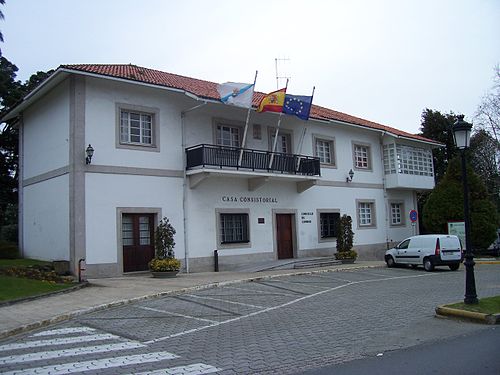
Cambre is a municipality located in the province of A Coruña, in the autonomous community of Galicia, Spain. Situated just over 10 kilometers from the regional capital, A Coruña, Cambre spans across an area of approximately 38.5 square kilometers. The municipality is characterized by a mix of rural and urban environments, featuring a population of around 23,000 residents as of the latest census. Cambre is bounded by the municipalities of Arteijo, A Coruña, Carral, and Culleredo, making it a part of the vibrant metropolitan area of A Coruña.
The history of Cambre is deeply rooted in its prehistoric and medieval past, with archaeological findings suggesting human settlement in the region dating back thousands of years. The town is notable for its historical architecture, including the Church of Santa María de Cambre, which showcases elements from various architectural styles, including Romanesque and Gothic. The area is also rich in natural beauty, with the nearby rivers and forests offering ample opportunities for outdoor activities. Cambre is known for its commitment to maintaining green spaces, and several parks and recreational areas are available for both residents and visitors.
Economically, Cambre has transitioned from its historical reliance on agriculture to a more diversified economy that includes commerce, services, and industry. The town benefits from its close proximity to A Coruña, which serves as a commercial hub, attracting businesses and contributing to Cambre's growth. Public services, education, and transportation have also improved in recent years, making Cambre an increasingly attractive place to live. Its combination of urban amenities and a tranquil, scenic environment makes Cambre a unique municipality that reflects both Galicia's rich heritage and its modern development. As such, Cambre continues to be a significant part of the Galician landscape, balancing tradition and contemporary living.
Facts about Cambre
- Cambre is known for its rich archaeological history, with numerous sites dating back to the Roman era, making it significant for studies of ancient Spain.
- The town's most famous landmark is the Church of Santa María de Cambre, which showcases a blend of Gothic and Baroque architectural styles.
- Cambre is part of the Greater A Coruña metropolitan area, contributing to its unique blend of urban and rural lifestyles.
- The area hosts the annual 'Festa do Senande', which celebrates local traditions and cuisine, distinguishing it from other towns in Galicia.
- Cambre has a notable natural park, the 'Parque de la Ciudad de Cambre', which provides recreational activities and scenic views, highlighting the town's commitment to preserving green spaces.
- The town has a rich tradition of Galician music and dance, with events like the 'Xira do San Juan' that involve folkloric performances.
- Cambre's economy is bolstered by its proximity to A Coruña, but it maintains its unique small-town feel with local artisan markets and community events.
- The town is involved in several environmental initiatives aimed at promoting sustainability, which is a growing concern in Spain's urban areas.
- Cambre has a unique blend of historical influences from its Celtic roots and later Roman and medieval developments, providing a diverse cultural tapestry.
- The town is known for local artisan products, particularly its traditional pottery and crafts, which reflect the region's cultural heritage.