Campobasso, Italy
- 49,230 people
- 16 places to visit
- 41.5603, 14.6617
Places to Visit (16)
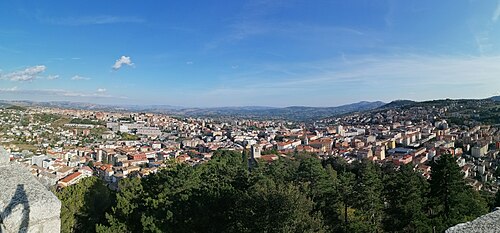
Campobasso is the capital city of the Molise region in southern Italy, situated in the Apennine Mountains. Known for its picturesque landscapes, the city sits at an elevation of about 700 meters (2,300 feet) above sea level, offering stunning views of the surrounding countryside. The population is around 50,000 residents, and the area is characterized by a mix of historical architecture and modern developments. Campobasso is well-connected to other Italian cities, particularly Rome and Naples, through a network of roads and railways that facilitate easy access for both residents and visitors.
Historically, Campobasso has a rich cultural heritage that dates back to the Roman era. Its medieval origins are reflected in the old town, where narrow streets and stone buildings evoke a sense of the past. The city is dominated by the Castello Monforte, a fortress built in the 15th century, which provides panoramic views and serves as a landmark of the city. Campobasso is also known for its vibrant local traditions, including its annual festivals and culinary delights, such as the region’s renowned cavatelli pasta and various local wines. The city hosts various museums and cultural institutions, including the Museo Sannitico, which showcases artifacts from the Samnite civilization, emphasizing its significance in the history of Italy.
In contemporary times, Campobasso remains a center for education and commerce within the Molise region, with several institutions of higher learning and a growing emphasis on sustainable development and tourism. The city's economy is largely driven by agriculture, small-scale industries, and artisan crafts, with local products gaining recognition beyond regional borders. As a quieter alternative to more touristic destinations, Campobasso offers visitors an authentic glimpse of Italian life, complemented by the warmth of its community and the richness of its cultural heritage. The open-air markets, local shops, and historical sites provide a unique blend of experiences for those who explore this charming city in the heart of Italy.
Facts about Campobasso
- Campobasso is the capital of the Molise region, making it a central administrative hub in an area that is less traveled by tourists compared to other Italian regions.
- The city boasts a unique blend of medieval architecture and modern structures, prominently featuring the Castello Monforte, a castle dating back to the 15th century that overlooks the city.
- Campobasso is home to the famous 'Sagra della Campagna', a traditional festival celebrating local agricultural products, particularly caciocavallo cheese, which is a key local delicacy.
- The city's historic center features a unique blend of narrow alleys and vibrant streets, with many buildings adorned with beautiful mosaics and artworks that reflect its rich cultural heritage.
- Campobasso is known for its impressive architecture, including the Church of Saint George, which showcases a mix of Romanesque and Gothic styles, distinct from the Baroque influences found in many other Italian cities.
- The region around Campobasso is famous for its natural beauty, including the nearby Matese Mountains, offering opportunities for outdoor activities that are lesser-known compared to popular tourist spots.
- Campobasso has a rich history of art and culture, being the birthplace of several notable figures, including the writer and historian Pietro Giannone, who contributed significantly to Italian literature.
- The city hosts the Museo Civico di Campobasso, which houses a collection of archaeological artifacts from the Samnite civilization, offering insight into the region's ancient history.
- Every year, Campobasso holds its own unique version of the 'Ndocciata,' a traditional festival featuring a parade of large torches, which is different from the more widely known festivals in other Italian cities.
- Campobasso is noted for its regional cuisine, particularly the 'pasta alla mugnaia,' a local dish made with a special type of pasta that highlights the traditions of the Molise region.