Carbonia, Italy
- 21,664 people
- 7 places to visit
- 39.1644, 8.5229
Places to Visit (7)
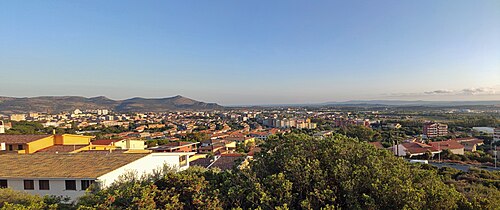
Carbonia is a town located in the southwestern region of Sardinia, Italy, and serves as the provincial capital of the province of Carbonia-Iglesias. Founded in the 1930s during Italy's Fascist period, Carbonia was established as a center for coal mining, primarily to stimulate the local economy and promote development in the region. The town's development was closely linked to the extraction of lignite, a type of coal, as it was situated in an area rich in mineral resources. The name "Carbonia" itself is derived from the Italian word "carboni," meaning "coals." The town was designed with modernist principles in mind, featuring wide avenues and functional urban layouts that distinguished it from older Sardinian settlements.
Throughout the years, Carbonia underwent significant changes, especially after World War II when coal mining activities began to decline due to a shift toward other energy sources. This decline resulted in economic challenges for the town as many inhabitants relied on the mining industry for their livelihoods. Nonetheless, Carbonia has worked to diversify its economy, focusing increasingly on tourism and cultural heritage. The surrounding landscape, characterized by beautiful beaches, rugged coastlines, and archaeological sites, offers potential for visitors. Nearby attractions include the UNESCO World Heritage-listed ruins of the ancient Nuragic civilization, such as the famous Su Nuraxi site in Barumini. The town itself hosts several important cultural festivals and events that celebrate its mining heritage while also promoting local traditions.
Today, Carbonia is a mix of historical narratives and modern aspirations. It boasts a population of around 26,000 residents and features various amenities, including schools, health facilities, and recreational areas. The city is also home to the Museo del Carbone, which showcases the history of coal mining in the region. Carbonia continues to evolve, seeking to attract both residents and tourists with its unique blend of history and natural beauty, all while grappling with the remnants of its industrial past. The town reflects the broader challenges faced by many post-industrial communities, striving to redefine its identity and pave a sustainable path for the future.
Facts about Carbonia
- Carbonia was founded in 1938 as a planned industrial city to support coal mining, making it one of the few cities in Italy established specifically for this purpose.
- The city is named after carbon, reflecting its historical significance in coal mining and the heavy industrialization that characterized the region.
- Carbonia's architecture features a unique blend of Fascist-era and modernist styles, distinguishing it from many other Italian towns that primarily showcase medieval or Renaissance architecture.
- The ruins of the ancient Phoenician city of Sulcis, located near Carbonia, offer a glimpse into the region's ancient trade and culture, setting it apart from other cities in Sardinia.
- Carbonia is home to the Museum of Coal, which highlights the history of coal mining in the area and its impact on the local economy and culture.
- The city is situated in the Sulcis-Iglesiente region, known for its striking natural landscapes and biodiversity, including unique geological formations and protected areas.
- Every year, Carbonia hosts the Coal Festival, celebrating the region's mining heritage with reenactments, exhibitions, and local cuisine, a distinct cultural event not commonly found in other Italian cities.
- Carbonia is integrated into the Circuito dei Castelli di Marmilla, which showcases the region's archaeological and historical importance, adding depth to its cultural offerings.
- The city's urban planning was influenced by the rationalist architectural movement of the time, making its layout and design distinct from older towns that evolved organically.
- Carbonia serves as the administrative capital of the Carbonia-Iglesias province, playing an essential role in the governance and economic development of southwestern Sardinia.