Cárdenas, Cuba
- 98,515 people
- 9 places to visit
- 23.0366, -81.2133
Places to Visit (9)
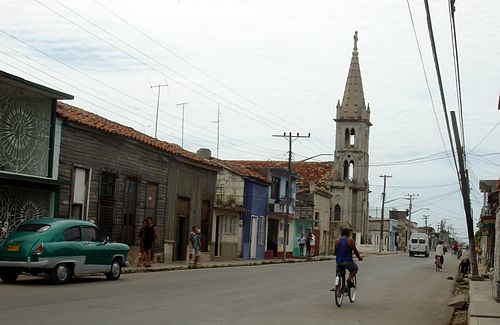
Cárdenas is a city located in the Matanzas Province of Cuba, situated on the northern coast of the island. Founded in 1806, it has a rich historical background characterized by its significant economic role in the sugar industry during the 19th century. The city was one of the first in Cuba to embrace a formal urban layout and modern infrastructure, which contributed to its rapid growth. Notably, Cárdenas is recognized for its traditional architecture, showcasing examples of neoclassical and eclectic styles. One famous landmark is the Parque de Cárdenas, a central plaza that serves as a hub for social and cultural activities.
Cárdenas played a pivotal role in Cuba's history. It is known for being the birthplace of the Cuban flag, as Francisco de Miranda, a precursor to independence movements in Latin America, presented the first flag design in the city. In addition to its historical significance, Cárdenas is also known for its vibrant cultural scene, with local festivals and events celebrating music, dance, and art, reflecting the diverse influences of Cuban culture. The nearby beaches, such as Playa Coral and Playa Varadero, add to the allure of the city, making it a destination for both national and international tourists. Despite the challenges faced by the Cuban economy, Cárdenas continues to thrive, preserving its historical legacy while adapting to modern needs.
Facts about Cárdenas
- Cárdenas is known for being the birthplace of the Cuban flag, created by the revolutionary Isabel de Guevara in 1849.
- The city has a unique architectural feature, the 'Cárdenas Lighthouse,' built in the 19th century, which is a historic landmark and a symbol of the city.
- Cárdenas is home to the largest oil refinery in Cuba, which plays a significant role in the Cuban economy.
- The city is famous for hosting the annual 'Cárdenas Cultural Festival,' which celebrates local art, music, and traditions.
- Cárdenas features a vibrant mural scene, with many public artworks reflecting the city's history and culture.
- The city has a rich history of fishing and was one of the first ports to operate in Cuba, contributing to its maritime heritage.
- Cárdenas is known for its production of 'Cohiba' cigars, which are among the most prestigious Cuban cigars worldwide.
- The 'Plaza de las Vírgenes' in Cárdenas is distinct for its historical significance and its beautiful sculptures and monuments.
- Cárdenas has a strong tradition of music and dance, particularly influenced by the African heritage, making it a cultural melting pot.
- The city's proximity to Varadero beach contributes to its popularity among tourists, differentiating it from many inland towns.