Cartagena, Colombia
- 914,552 people
- 11 places to visit
- 10.3932, -75.4832
Places to Visit (11)
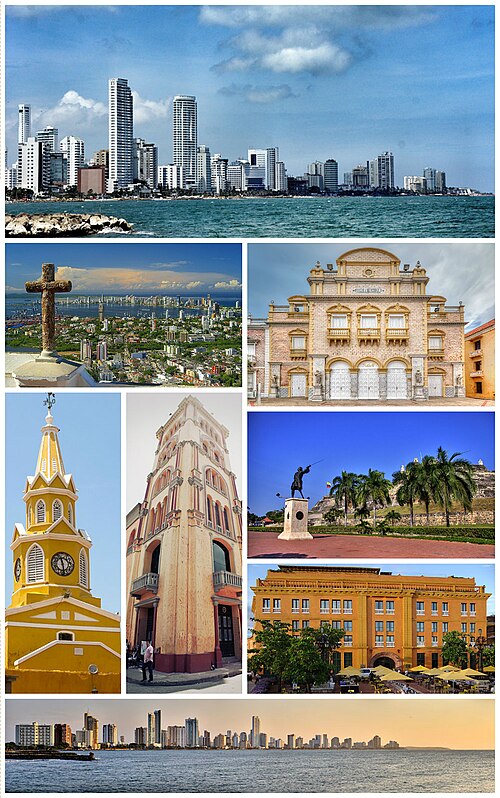
Cartagena, a vibrant coastal city on Colombia's northern Caribbean coast, is renowned for its rich history and stunning architecture. Founded in 1533 by Spanish explorer Pedro de Heredia, it quickly became one of the most important ports in the Spanish Empire, serving as a key hub for trade and the export of silver from Peru. The city's historical significance is reflected in its well-preserved colonial architecture, including the iconic walls that encircle the Old Town, a UNESCO World Heritage site. The 13-kilometer-long fortifications, completed in the 17th century, were built to protect against pirates and foreign invasions, and today they stand as a testament to Cartagena's strategic military past.
Cartagena's Old Town is characterized by its cobblestone streets, colorful buildings, and bustling plazas. Notable landmarks include the Cathedral of Saint Catherine of Alexandria, which showcases impressive Baroque architecture, and the Castillo San Felipe de Barajas, a fortress that remains one of the most important military structures in Colombia. The city's culture is a vibrant blend of African, Spanish, and Indigenous influences, reflected in its music, art, and culinary traditions. Events such as the Cartagena International Music Festival and the Hay Festival attract artists and intellectuals from around the world, showcasing the city's ongoing cultural vibrancy. Additionally, Cartagena's modern districts and coastal resorts draw tourists for their beautiful beaches, lively nightlife, and rich culinary offerings, making it a sought-after destination for travelers seeking both history and relaxation.
Economically, tourism plays a crucial role in Cartagena's development, bolstered by its appeal as a historical and cultural wonder. The city is also a significant industrial and commercial center, housing one of Colombia's most important ports. Nevertheless, the city faces challenges such as inequality and urbanization. Despite these issues, Cartagena continues to captivate visitors and locals alike with its enchanting blend of history, culture, and natural beauty, standing as a symbol of Colombia's diverse heritage and resilience.
Facts about Cartagena
- Cartagena is known for its well-preserved colonial architecture, earning it designation as a UNESCO World Heritage Site in 1984.
- The city was a significant port during the Spanish colonial period, serving as a key hub for trade and the export of gold and goods from the Americas.
- Cartagena boasts a vibrant cultural scene, with numerous festivals, including the Cartagena International Music Festival and the Hay Festival.
- The 16th-century fortress of Castillo San Felipe de Barajas is located in Cartagena, recognized as one of the most important military structures built by the Spanish in the Americas.
- Cartagena's Old Town is surrounded by a fortified wall, which was constructed to protect the city from pirate attacks and is now a popular tourist attraction.
- La Heroica is a nickname for Cartagena, celebrating its resilience during multiple pirate invasions and its role in Colombia's independence.
- The city has several beautiful beaches, such as Playa Blanca, which attracts both locals and tourists seeking sun and sand.
- Cartagena was the first city in South America to have a public library, established in 1823, highlighting its historical emphasis on education and culture.
- The indigenous people of the area, particularly the Zenú, have a rich heritage that contributes to Cartagena's cultural diversity.
- Cartagena is famous for its rum production, particularly renowned brands like Ron Medellín and Ron Cartagena, which are sought after both nationally and internationally.