Castrop-Rauxel, Germany
- 77,924 people
- 8 places to visit
- 51.5633, 7.315
Places to Visit (8)
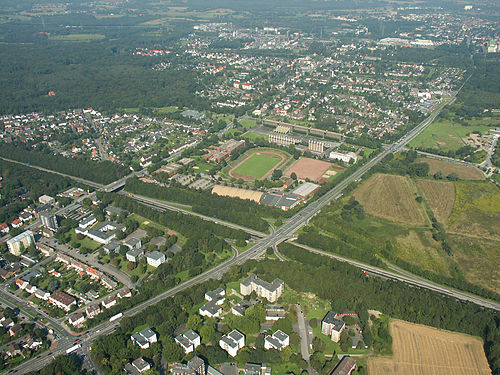
Castrop-Rauxel is a town located in North Rhine-Westphalia, Germany, and serves as an important urban center in the Ruhr area. With a population of around 76,000 residents, it encompasses a diverse landscape characterized by both urban development and green spaces, reflecting the region's industrial heritage. The town has experienced significant changes over the decades, transitioning from a mining hub in the 19th and early 20th centuries to a modern city focused on services, education, and technology. Castrop-Rauxel's economy historically centered on coal mining and steel production, but as these industries declined, the town diversified its economic base, striving to attract new businesses and cultural initiatives.
The town is well-connected through an extensive transportation network, including rail and road links that facilitate travel to nearby cities such as Dortmund and Bochum. Castrop-Rauxel is served by several local train lines, making it an attractive location for commuters. The city also hosts various educational institutions, including schools and vocational training centers, ensuring that residents have access to quality education and professional development opportunities. In terms of culture, the town showcases a range of facilities including theaters, museums, and sports venues that cater to a vibrant community life. Notable landmarks include the historic town center featuring the St. Lambert's Church, which reflects the town's architectural heritage, and several parks that provide recreational opportunities for families and individuals alike.
Overall, Castrop-Rauxel presents a blend of historical significance and modern amenities. The local government focuses on sustainable urban development, enhancing public spaces, and promoting regional collaboration to further the economic and social welfare of its residents. With ongoing initiatives aimed at improving infrastructure and fostering community engagement, Castrop-Rauxel continues to develop as a dynamic city within the Ruhr area, balancing its historical roots with a forward-looking vision.
Facts about Castrop-Rauxel
- Castrop-Rauxel is known for its unique location in the Ruhr area, which historically was a major center for coal mining and heavy industry.
- The city is home to the Zeche Ickern, a former coal mine that has been transformed into a cultural and educational site, highlighting the region's industrial heritage.
- Castrop-Rauxel hosts the annual 'Rauxel Winterwald' Christmas market, which is noted for its festive ambiance and local crafts distinct from larger markets in the area.
- The city has a rich history in coal mining, but unique to Castrop-Rauxel is its transformation into a green city with numerous parks, exemplified by the well-known Stadtpark.
- Castrop-Rauxel features a unique mix of historical architecture and modern developments, with landmarks such as the St. Johannes Baptist Church and the historic Old Town.
- The city's motto, 'Zukunftsorientiert', reflects its emphasis on future-oriented urban development while preserving historical elements.
- Castrop-Rauxel was once part of the renowned mining region known as the 'Ruhrgebiet', which distinguishes its historical identity from other German cities.
- The city is interconnected through a significant network of bicycle paths, making it stand out among other German towns focused on promoting cycling as a sustainable transport option.
- Castrop-Rauxel's commitment to sustainability is demonstrated by its initiatives focused on renewable energy and ecological development, marking it as a pioneer in the region.
- Historically, Castrop-Rauxel was a site for several notable events during the industrial revolution, giving it a distinct narrative in the broader context of Germany's industrial past.