Cavaillon, France
- 26,689 people
- 10 places to visit
- 43.8366, 5.0408
Places to Visit (10)
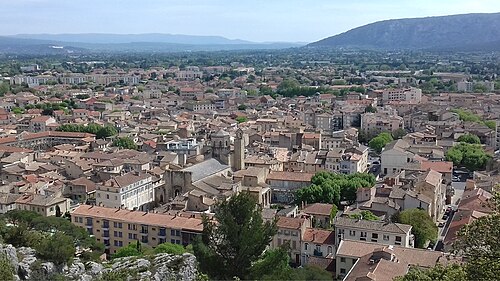
Cavaillon is a commune in the Vaucluse department in the Provence-Alpes-Côte d'Azur region of southeastern France. Nestled at the junction of the Durance River and the Roman aqueduct that flows through the region, Cavaillon boasts a rich history that dates back to ancient times. The area was inhabited by the Celts before it became a Roman settlement, known as Cavallionum. The remnants of its Roman past can still be seen today, with notable structures such as the ruins of the ancient theater, which underscore the town’s historical significance. Cavaillon is also known for its beautiful landscapes, characterized by rolling hills that are dotted with vineyards, orchards, and olive groves.
The town is perhaps best recognized for its famous Cavaillon melon, a sweet and juicy variety celebrated for its quality and flavor. This local delicacy plays a significant role in the economy and gastronomy of the area, often featured in markets and regional dishes. Cavaillon has a vibrant local culture, evident in its annual festivals, including the celebrated melon festival that attracts visitors from around the region. The town’s architecture showcases a blend of historical influences, from medieval buildings to contemporary structures, reflecting its evolution through the centuries. Notable landmarks include the 12th-century Cathedral of Saint-Véran and the nearby Saint Jacques chapel, which add to the town's charm.
Cavaillon's geographical position makes it a gateway to exploring the wider region, including the nearby Luberon Natural Regional Park, known for its picturesque villages and hiking routes. The town is well-connected by road and rail, facilitating access to larger urban centers like Avignon and Aix-en-Provence. With its intriguing history, rich agricultural heritage, and scenic surroundings, Cavaillon serves as a captivating destination for tourists and a pleasant residence for its inhabitants.
Facts about Cavaillon
- Cavaillon is known for its ancient origins, with evidence of habitation dating back to Roman times, notably the well-preserved Roman aqueduct, the 'Aqueduc de Cavaillon'.
- The town is celebrated for its melons, particularly the Cavaillon melon, which is a highly-regarded variety in France and is a key part of the local agriculture and economy.
- Cavaillon was once a significant site for Jewish communities, and the town maintains a historical Jewish cemetery that dates back to the 18th century, showcasing its diverse cultural history.
- The town features the impressive Saint-Véran Cathedral, built between the 12th and 18th centuries, recognized for its distinct mix of architectural styles and its beautifully ornate organs.
- Cavaillon hosts the annual 'Fête de la Melon', celebrating its famous melon harvest with local markets, festivals, and culinary showcases, attracting visitors from all around Provence.
- The town's location along the 'Route des Caves' makes it a notable point for wine tourism, connecting visitors to local vineyards and wineries in the Provence region.
- Cavaillon also has a rich tradition of pottery and craftsmanship, including the unique 'Cavaillon ceramics' which showcases the skills of local artisans.
- The city has a historical connection to the French Revolution, being noted for early revolutionary activity and the Jacobin Club established there during the period.
- Cavaillon features a series of picturesque fountains and public squares, such as the Place de la Liberté, which reflect the town's commitment to preserving its historical character.
- The town's proximity to the Luberon National Park and the Vaucluse Mountains offers unique outdoor recreational opportunities, distinguishing it as a gateway for hiking and nature exploration in the region.