Ceuta, Spain
- 85,144 people
- 13 places to visit
- 35.8894, -5.3213
Places to Visit (13)
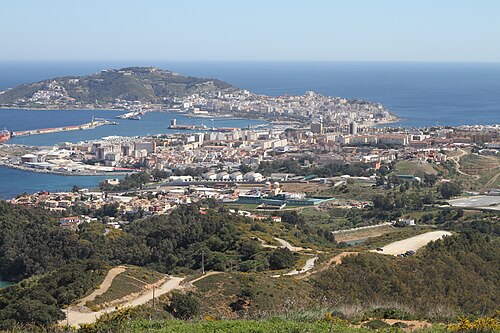
Ceuta is an autonomous city of Spain located on the northern coast of Africa, bordered by Morocco. It sits on a strategic point at the entrance to the Mediterranean Sea, opposite the Rock of Gibraltar. Covering an area of approximately 19.5 square kilometers, Ceuta is surrounded by the Mediterranean on one side and the Atlantic Ocean on the other. With a population of around 85,000 inhabitants, the city showcases a unique blend of cultures, including Spanish, Moroccan, and various other ethnicities, reflecting its long history as a crossroads of civilizations.
The history of Ceuta dates back to antiquity, with evidence of Phoenician and Roman settlements in the region. In 1415, the city became part of the Kingdom of Portugal, and in 1580 it was claimed by Spain after the Iberian Union. Over the years, Ceuta has held a significant military and strategic importance, serving as a fortress and naval base. Its economy is primarily based on commerce, tourism, and the fishing industry, with the port playing a crucial role in maritime trade and logistics. The local economy benefits from its status as a free trade zone, attracting businesses and providing employment opportunities.
Culturally, Ceuta is marked by its religious diversity, with a notable presence of Christianity, Islam, and Judaism. This diversity is evident in its architecture, cuisine, and festivals. The city boasts several historical landmarks, including the impressive walls of the Royal Fortress and the peaceful atmosphere of the Mediterranean gardens. Additionally, Ceuta's natural beauty, featuring beaches and rugged coastlines, makes it a desirable destination for tourists. Its unique geographical position not only offers stunning views but also makes it an accessible point for travelers looking to explore both African and European cultures. Overall, Ceuta stands as a vibrant and historically rich city that reflects the complexities of its multicultural heritage.
Facts about Ceuta
- Ceuta is an autonomous city of Spain located on the northern coast of Africa, bordered by Morocco.
- The city has a unique strategic position, being one of two Spanish territories on the African mainland, the other being Melilla.
- Ceuta has a rich history influenced by various civilizations, including the Phoenicians, Romans, and Moors, which is evident in its diverse architecture.
- The Royal Palace of Ceuta, constructed in the late 18th century, showcases a blend of styles and is a key historical landmark in the city.
- Ceuta is home to the only Spanish enclave in Africa that allows for a significant military presence, given its strategic naval importance.
- The city is known for its beautiful beaches, such as Playa de la Ribera, which attracts both locals and tourists from around the world.
- Ceuta hosts a unique cultural blend, where Spanish and Moroccan traditions coexist, evident in its festivals, cuisine, and daily life.
- The city has a large port that serves as a key point for ferry services to the Spanish mainland and international connections, differentiating it from other inland cities.
- Ceuta is a significant tax-free zone, attracting shoppers and businesses, making it economically distinct from other Spanish regions.
- The annual 'Feria de Ceuta,' a vibrant fair featuring music, food, and cultural displays, showcases the city's rich heritage and communal spirit.