Chandīgarh, India
- 960,787 people
- 16 places to visit
- 30.7333, 76.7794
Places to Visit (16)
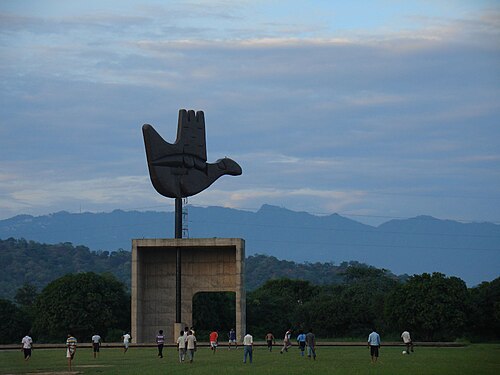
Chandigarh, a city and union territory in northern India, serves as the capital for both Punjab and Haryana. It was conceived in the early 1950s as a planned city, designed by the renowned French architect Le Corbusier, who aimed to create a modern urban landscape that would embody the ideals of postcolonial India. The city occupies approximately 114 square kilometers and boasts a unique blend of modernist architecture and green spaces, with meticulously organized sectors serving as the backbone of its design. Le Corbusier’s vision included a focus on open spaces, gardens, and the separation of vehicular and pedestrian movement, making Chandigarh an exemplar of urban planning.
Chandigarh is often referred to as "The City Beautiful" due to its lush gardens, wide boulevards, and striking architecture. It features significant landmarks such as the Rock Garden, created by Nek Chand, which is composed of recycled materials and showcases the ingenuity of local artisans. The Sukhna Lake, an artificial reservoir, is a popular recreational area that attracts both residents and tourists alike. The city also houses several important government buildings including the Punjab and Haryana High Court, the Legislative Assembly, and the Raj Bhavan, all of which reflect Le Corbusier's architectural style. Chandigarh's cultural diversity is enriched by its population, primarily consisting of Punjabis, as well as significant communities from various parts of India, contributing to a vibrant mosaic of traditions and lifestyles.
In terms of economy, Chandigarh serves as a commercial hub with a thriving service sector, including IT and telecommunications, education, and healthcare. The city is home to reputed educational institutions such as the Punjab University and Government Medical College and Hospital. Its strategic location near the borders of Punjab and Haryana, combined with good connectivity via road and rail, has further propelled its development. The city continues to prioritize sustainable urban development, with ongoing efforts to enhance its infrastructure and amenities, reflecting a commitment to maintaining its status as a leading city in India.
Facts about Chandīgarh
- Chandīgarh is India's first planned city and was designed by the famous French architect Le Corbusier in the 1950s.
- The city serves as the capital for two states, Punjab and Haryana, making it a unique administrative hub.
- Chandīgarh is home to the world's largest rose garden, the Zakir Hussain Rose Garden, which has over 1,600 different species of roses.
- The city features the iconic Rock Garden, created by artist Nek Chand, which is made entirely from industrial and urban waste.
- Chandīgarh is known for its modernist architecture and urban design, a rare characteristic compared to many historical cities in India.
- It hosts the annual Chandigarh Carnival, showcasing local culture, arts, and crafts, attracting visitors from across the country.
- Chandīgarh has one of the highest per capita incomes in India, reflecting its status as a prosperous city.
- The city is recognized for its extensive greenery, with around 47 parks that contribute to its reputation as a 'City Beautiful.'
- Chandīgarh has a well-developed public transportation system, including a metro network, which sets it apart from many other Indian cities.
- The city is also noted for its educational institutions, including Panjab University, one of the oldest universities in India.