Cheongju-si, South Korea
- 846,291 people
- 5 places to visit
- 36.6273, 127.4987
Places to Visit (5)
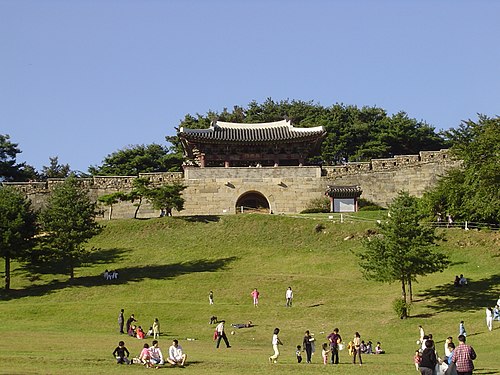
Cheongju-si is a city located in the North Chungcheong Province of South Korea and serves as the provincial capital. With a population of over 800,000 residents, it is one of the most populous cities in the region. Cheongju has a rich history that dates back to ancient times, being known as a significant cultural and economic center. The city's history is closely associated with the invention of the Korean movable type printing press in the 15th century by Yi Seung-in, which played a crucial role in Korea's intellectual development. To commemorate this historical achievement, the city is home to the Cheongju Early Printing Museum, which showcases artifacts and exhibits related to the evolution of printing in Korea.
Cheongju is also distinguished by its blend of modernity and tradition, featuring various cultural landmarks. The city boasts several notable sites, including the Cheongju National Museum, which houses a collection of artifacts from the region's long history, and Sangdangsanseong, a well-preserved fortress that offers panoramic views of the surrounding landscape. Additionally, Cheongju hosts events and festivals year-round that celebrate its cultural heritage, such as the Cheongju Craft Biennale, which focuses on contemporary crafts and encourages artistic innovation. The local economy is diverse, with industries ranging from manufacturing to technology, while educational institutions, including Chungbuk National University, contribute to an active student community and intellectual atmosphere. As a gateway to other parts of South Korea, Cheongju's well-developed transportation infrastructure, including rail and bus connections, makes it accessible and increasingly popular among tourists and residents alike.
Facts about Cheongju-si
- Cheongju-si is known as the birthplace of Hangul, the Korean alphabet, with the historic site of the Cheongju Early Printing Museum located in the city.
- The city is home to the Cheongju National Museum, which showcases artifacts from the ancient Baekje Kingdom, highlighting its rich historical significance.
- Cheongju-si hosts the annual Cheongju Craft Biennale, which is the only global-level craft biennale in South Korea, attracting artists and visitors from around the world.
- The city is recognized for its significant archaeological site, the Cheongju Seonbi Village, which preserves the culture and history of Confucian scholars in Korea.
- Cheongju's Hanbat Library is notable for being the first public library in South Korea, established in 1920, emphasizing the city's long-standing commitment to education and culture.
- The city has a unique local specialty known as Cheongju Jjimdak, a traditional braised chicken dish that showcases the region’s culinary heritage.
- Cheongju-si is surrounded by beautiful natural landscapes, including the picturesque Chungbuk National University campus and the scenic mountain, Mt. Obongsan.
- The city played a crucial role during the Korean War, and the Cheongju Air Force Base remains an important military installation.
- Cheongju hosts the annual Cheongju Early Printing Festival, celebrating the city's historical contributions to printing and publishing in Korea.
- The Gyeonggijeon Hall, located in Cheongju, is a designated Cultural Heritage Site and was used during the Joseon Dynasty as a royal portrait hall.