Choloma, Honduras
- 139,100 people
- 6 places to visit
- 15.6055, -87.9559
Places to Visit (6)
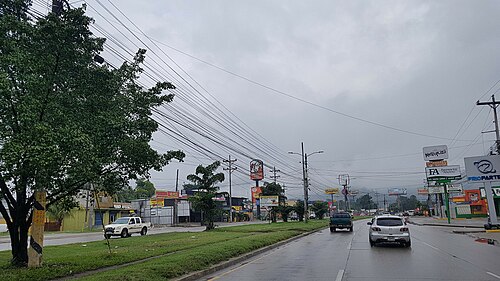
Choloma is a city located in the Cortés department of Honduras, situated to the north of the country, just a few kilometers from the industrial hub of San Pedro Sula. As one of the most populous cities in Honduras, Choloma serves as a significant urban center with a growing population that has exceeded 200,000 residents. The city experiences a subtropical climate, characterized by a wet season from May to October and a dry season from November to April, which impacts its agricultural practices and economic activities.
Choloma has a diverse economic base, heavily influenced by manufacturing and commerce. It is known for its numerous assembly plants and textile factories, contributing substantially to the local and national economy. The city has attracted investments due to its strategic location and availability of labor, positioning it as an important player in the global supply chain. In addition to manufacturing, Choloma has a vibrant commercial sector, with markets and shops that cater to the needs of local residents. The city's infrastructure has developed to support its rapid growth, yet it still faces challenges common to many urban areas, such as traffic congestion, inadequate public services, and issues related to urban planning.
Culturally, Choloma has a rich heritage influenced by various ethnic backgrounds, including Indigenous, Spanish, and Afro-descendant populations. This cultural diversity is reflected in local festivals, music, and food, which play an essential role in the community’s identity. Educational institutions and healthcare facilities are integral to the city's development, aiming to improve the quality of life for its inhabitants. Despite facing challenges such as social inequality and crime, Choloma's resilience and strategic development initiatives signify its importance in the national context. Overall, Choloma continues to evolve, driven by its economic potential and cultural vibrancy, making it a noteworthy city in Honduras.
Facts about Choloma
- Choloma is one of the most industrialized cities in Honduras, known for its numerous manufacturing and textile factories.
- The city was founded in 1961 and has since grown rapidly, making it a significant urban center in the San Pedro Sula metropolitan area.
- Choloma is situated near the banks of the Choloma River, which has historically provided resources for agriculture and industry.
- The city is home to the Choloma soccer team, C.D. Choloma, which competes in the Liga Nacional de Fútbol de Honduras.
- Choloma has a unique cultural identity, influenced by both indigenous and mestizo traditions, visible in its local festivals and cuisine.
- One of the notable landmarks in Choloma is the Parque Central, a vibrant hub for community activities and events.
- Choloma's proximity to San Pedro Sula, one of the largest cities in Honduras, has made it a crucial area for commerce and employment opportunities.
- The city plays a vital role in the remittance economy of Honduras, with many residents working abroad and sending money back to support their families.
- Choloma also faces challenges related to urbanization, including infrastructure development and social issues, making it a focal point for urban studies.
- The city celebrates the Fiestas Patronales in honor of Our Lady of Suyapa, featuring parades, music, and traditional activities that highlight local culture.