Chongjin, North Korea
- 327,000 people
- 1 places to visit
- 41.767, 129.7234
Places to Visit (1)
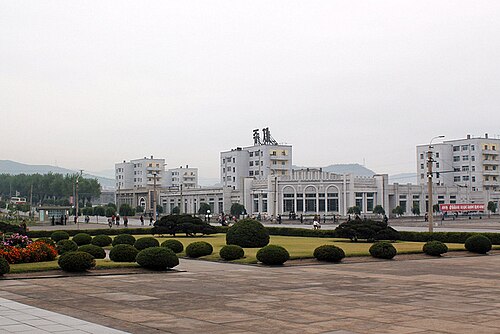
Chongjin is a significant port city located in the northeastern part of North Korea along the Sea of Japan, also known as the East Sea of Korea. It is the capital of North Hamgyong Province and serves as a crucial industrial hub. The city's strategic location facilitates maritime trade, making it an essential gateway for commerce and transportation within the country. Chongjin has a well-developed industrial base, with major sectors including metallurgy, machinery, and shipbuilding. The city is also known for its coal mines, which contribute to North Korea's energy resources. Despite the hardships faced by the country, Chongjin remains important for the government due to its industrial capabilities.
With a population estimated at around 300,000 inhabitants, Chongjin is one of North Korea's larger cities. The city has undergone various transformations since its establishment in the early 20th century, evolving into an urban center that showcases the stark contrast between the country's infrastructure and the daily lives of its residents. Chongjin features a mix of Soviet-era architecture alongside modern developments, reflecting North Korea's historical influences and attempts at modernization. While the city has educational institutions and cultural facilities, residents often struggle with limited access to goods and services, reflecting broader economic difficulties experienced nationwide. The city's climate is characterized by cold winters and warm summers, which shapes the lifestyle and economic activities of its inhabitants.
Although Chongjin is less known on the international stage compared to Pyongyang, it holds historical significance within North Korea. The area has seen various political movements and is notable for its proximity to the borders with China and Russia, fostering a degree of intercultural exchange and illicit trade. Despite the tight surveillance and restrictions imposed by the North Korean government, some residents have reportedly engaged in informal market activities known as “jangmadang,” reflecting a gradual shift towards market-oriented practices. Over the years, Chongjin has thus become emblematic of the complex dynamics present within North Korean society, illustrating both the resilience of its people and the challenges faced under an isolated regime.
Facts about Chongjin
- Chongjin is known as North Korea's major port city, serving as the primary gateway for trade and transport with foreign countries.
- The city hosts the 4.26 Factory, which is famed for producing machinery and equipment, and is named after the date of Kim Il-sung's liberation of Korea in 1945.
- Chongjin is home to the Chongjin Shipbuilding Complex, one of the largest shipyards in the country, making it significant for North Korea's maritime industry.
- The city has a unique geographical feature as it lies between the Taebaek Mountains and the East Sea, offering both scenic views and natural resources.
- Chongjin serves as a key educational center for the region, with institutions like the Chongjin University of Technology providing specialized training.
- The city has a rich history as an industrial center, particularly during the Korean War when it became a strategic location for North Korean military logistics.
- Chongjin's Rocket Plant is noteworthy for its role in the development of North Korea's missile technology, distinguishing it from other cities focused on agriculture or light industry.
- Unlike many other cities in North Korea, Chongjin has a relatively more diverse population with significant influences from both traditional Korean culture and Soviet-era industrialization.
- Chongjin has a large fishing industry, benefiting from its coastal location, and is known for the production of various seafood, a staple in North Korean cuisine.
- The city celebrates the 'Chongjin Festival of Youth', an annual event that showcases local art, music, and cultural performances, highlighting the city's youthful spirit and creativity.