Ciudad Guayana, Venezuela
- 950,000 people
- 9 places to visit
- 8.3663, -62.6497
Places to Visit (9)
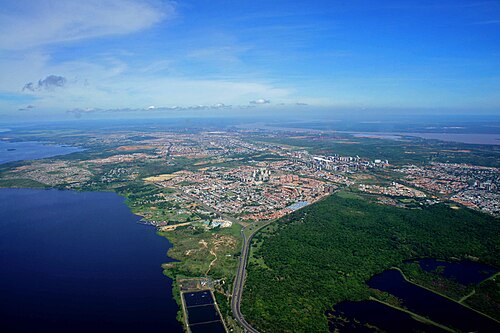
Ciudad Guayana, located in southeastern Venezuela, is a strategically important city that serves as a major industrial hub within the Bolívar state. It was founded in 1961 through the merger of two older towns, San Félix and Puerto Ordaz, and is situated at the confluence of the Orinoco and Caroní rivers. The city plays a vital role in the country's economy, largely due to its abundant natural resources, including significant deposits of iron ore and bauxite, which support the steel and aluminum industries. Ciudad Guayana is also home to the largest hydroelectric plant in Venezuela, the Guri Dam, which generates a substantial portion of the nation's electricity.
The population of Ciudad Guayana has grown remarkably since its establishment, reaching approximately 800,000 residents as of the latest estimates. This growth is largely driven by the city’s development as an industrial center and its proximity to rich mineral resources. The city's infrastructure includes residential areas, educational institutions, and health facilities, although it has faced challenges due to economic crises and political instability in the country. Ciudad Guayana is characterized by a diverse demographic, with a mix of Indigenous, Afro-Venezuelan, and European descendant communities. As a cultural melting pot, it offers various festivals and celebrations that reflect this diversity, while also being a gateway to Brazil, enhancing its regional significance.
Despite its economic potential, Ciudad Guayana has grappled with several issues, including crime, unemployment, and infrastructure decay, exacerbated by Venezuela's broader socio-economic challenges. The city remains a focal point for migration within the country, as people seek employment in its industrial sectors. Additionally, environmental concerns related to the mining and industrial activities pose challenges for sustainable development. Nevertheless, Ciudad Guayana continues to be a critical location for both the Venezuelan economy and its socio-cultural landscape, embodying the complexities of modern urban life in the context of the larger national situation.
Facts about Ciudad Guayana
- Ciudad Guayana is the only city in Venezuela that was specifically designed as an industrial city, established in the 1960s to support the growth of the steel and aluminum industries.
- The city is home to the largest hydroelectric plant in the country, the Guri Dam, which provides a significant portion of Venezuela's electricity and is considered one of the largest dams in the world.
- Ciudad Guayana is strategically located at the confluence of the Orinoco and Caroní rivers, making it a vital transportation and trade hub.
- The city boasts a unique urban layout with a mix of industrial zones and residential areas, reflecting its planned development origin.
- Ciudad Guayana is one of the few places in Venezuela where the indigenous Pemon people continue to maintain their cultural heritage and traditions.
- The city is known for its rich biodiversity and is near the Canaima National Park, a UNESCO World Heritage Site, which features spectacular landscapes and unique ecosystems.
- Unlike many other Venezuelan cities, Ciudad Guayana hosts annual cultural events that celebrate both local industries and the indigenous heritage of the area.
- The city's development has been fueled by the discovery of iron ore and bauxite in the region, leading to the establishment of major industries such as Sidor (a steel production company) and Alcasa (a national aluminum company).
- Ciudad Guayana has an extensive network of parks and public spaces, with the Orinoco Boulevard serving as a popular recreation area that distinguishes it from other more densely populated cities in Venezuela.
- The city's population has grown significantly due to rural-to-urban migration, making it one of the fastest-growing urban areas in the country, with a diverse demographic influenced by various cultural backgrounds.