Civitavecchia, Italy
- 47,543 people
- 13 places to visit
- 42.0923, 11.7955
Places to Visit (13)
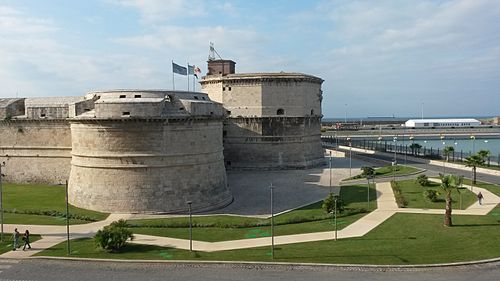
Civitavecchia is a coastal city located in the Lazio region of Italy, approximately 80 kilometers northwest of Rome. It serves as an important port city on the Tyrrhenian Sea, known primarily for its role as a gateway for maritime traffic to the capital and other Mediterranean destinations. The city has a rich historical background, tracing its origins back to ancient times when it was known as Centumcellae, named after the hundred cells or warehouses that stored goods. Civitavecchia flourished during the Roman Empire, serving as a vital link to Rome for trade, transport, and naval activities. Today, remnants of this era can still be seen, notably in the form of the ancient harbor, which is one of its defining features.
The economy of Civitavecchia is heavily reliant on its port, which is one of the largest in Italy. It facilitates the transit of millions of tourists annually, primarily cruise passengers heading to Rome, as well as commercial freight shipping. The port's importance has been amplified by the city’s strategic location, making it a preferred stop for Mediterranean cruises. In addition to maritime activities, Civitavecchia has developed a thriving tourism sector, capitalizing on its historical architecture and proximity to significant attractions, including the Etruscan archaeological sites of Tarquinia and Cerveteri and the famous thermal baths at the nearby town of Santa Severa. The city features notable sites such as the Forte Michelangelo, a fortress built in the 16th century to protect the harbor, and the Cathedral of San Francesco d'Assisi, showcasing the blend of historical influences that characterize the region.
Civitavecchia also offers a vibrant cultural scene, with various festivals and events throughout the year that reflect its rich heritage. The city’s strategic location, historical significance, and modern amenities make it a unique destination for both local residents and visitors. Its blend of ancient history, a bustling port, and scenic coastal landscapes contribute to its charm, making Civitavecchia an integral part of Italy's cultural and economic tapestry. With its convenient access to Rome and picturesque surroundings, the city continues to attract tourists and plays a vital role in the region's maritime economy.
Facts about Civitavecchia
- Civitavecchia is primarily known as a major port city in Italy, serving as the main maritime gateway to Rome, which distinguishes it from many other towns that are landlocked or smaller in size.
- The city's name literally means 'Ancient Town' in Italian, hinting at its Roman roots and long history as a crucial harbor since antiquity.
- Civitavecchia hosts the Forte Michelangelo, a 16th-century fortress designed by Michelangelo himself, which serves as a notable historical and architectural landmark in the town.
- The city has been a strategic naval base since the Roman Empire, and its history includes significant military engagements, setting it apart from other Italian cities that lacked such a military past.
- Every year, Civitavecchia holds the 'Civitavecchia in Festa', a vibrant local festival featuring traditional foods, music, and parades, showcasing the city's cultural identity.
- Civitavecchia's port is one of the largest in the Mediterranean and serves as a departure point for several cruise lines, marking its importance in both tourism and trade.
- The city has a unique district called 'Il Pincio', which offers picturesque views of the sea and is a popular spot for locals and tourists alike, different from urban centers that may lack coastal access.
- Civitavecchia was originally founded by Emperor Trajan as a place to anchor ships heading to Rome, making it a unique historical site associated with imperial Roman influence.
- The city is the seat of the Roman Catholic diocese of Civitavecchia-Tarquinia, underlining its religious significance and distinct community identity in the region.
- Civitavecchia has a series of ancient Roman ruins, including tombs and remnants of baths, which provide insights into the Roman way of life, setting it apart from purely medieval-centric towns.