Cloppenburg, Germany
- 31,177 people
- 10 places to visit
- 52.8453, 8.0473
Places to Visit (10)
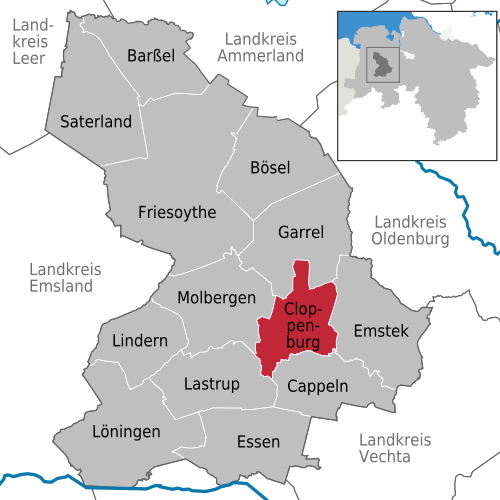
Cloppenburg is a town in Lower Saxony, Germany, renowned for its rich history, agricultural significance, and vibrant community. Located approximately 30 kilometers southwest of Oldenburg, Cloppenburg serves as the administrative center of the district of the same name. With a population of around 37,000 residents, the town offers a balanced mix of modern amenities and historical charm. Despite its relatively small size, Cloppenburg boasts a well-developed infrastructure, including a range of educational institutions, medical facilities, and recreational areas that enhance the quality of life for its inhabitants.
The history of Cloppenburg dates back to the early Middle Ages, and it was officially recognized as a town in 1803. The region is particularly noted for its agricultural heritage, which is showcased in the Cloppenburg Museum Village, an open-air museum that preserves and exhibits the traditional rural life of the area. This museum attracts visitors both for its historical significance and its interactive approach to culture. Cloppenburg also hosts various events and festivals throughout the year, which serve to foster community spirit and celebrate regional traditions. The town is well-connected via road and rail, making it an accessible destination for those exploring the picturesque landscapes of Lower Saxony.
Economically, Cloppenburg is characterized by a diverse mix of industries, including agriculture, manufacturing, and services. The town benefits from its proximity to larger urban centers, while still maintaining a strong local economy. Through a combination of local businesses, markets, and agricultural production, Cloppenburg provides a variety of job opportunities for its residents. The town's commitment to sustainability is evident in its initiatives to promote eco-friendly practices and green spaces, ensuring that the environment is preserved for future generations. Overall, Cloppenburg embodies a harmonious blend of history, culture, and community spirit, making it a significant locale within Lower Saxony and an attractive place to live or visit.
Facts about Cloppenburg
- Cloppenburg is home to the Cloppenburg Museum Village, an open-air museum that showcases the life and architecture of the region from the 19th and early 20th centuries.
- The city features a unique blend of historical landmarks, including the 13th-century St. Andrew's Church, which reflects the city's medieval roots.
- Cloppenburg was one of the first towns in Lower Saxony to be granted town privileges in 1850, marking its significance in regional development.
- The city celebrates its annual 'Cloppenburg Spring Fair,' known for its colorful parades, local crafts, and traditional food, distinguishing it from other regional fairs.
- Cloppenburg is situated along the famous Oldenburger Küstenkanal, which highlights the city's historic role in trade and transportation.
- The city has a rich agricultural background and maintains a vibrant local farmers' market, emphasizing its connection to rural culture and produce.
- Cloppenburg hosts the 'Days of the Historic Farm,' a popular event that showcases historical farming techniques and promotes sustainable agriculture.
- The city is known for its active role in the preservation of the Lower Saxon dialect, with various community initiatives aimed at keeping the local language and culture alive.
- Cloppenburg has a notable connection to the German Ariens, being a part of the territory known for the grazing of the famous black-and-white Holstein cattle.
- The city’s location makes it a hub for cycling enthusiasts, with extensive bike paths and routes that connect to the scenic countryside of the Oldenburger Münsterland.