Coburg, Germany
- 41,901 people
- 14 places to visit
- 50.2612, 10.9627
Places to Visit (14)
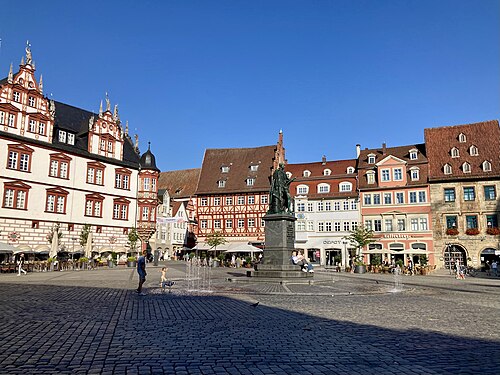
Coburg is a city located in the northern part of Bavaria, Germany, nestled within the picturesque Franconian region. With a rich history that dates back to the early Middle Ages, Coburg has evolved into a significant cultural and historical center. The city’s origins can be traced to its establishment around the 11th century, when it was developed as a fortified settlement. Coburg gained prominence in the 13th century, becoming the seat of the Duke of Saxe-Coburg, which marked the beginning of its integral role within the Saxon duchies. The city played a crucial part in the politics of the region and became known for its impressive architecture, showcasing a blend of Gothic, Renaissance, and Baroque styles.
One of Coburg's most notable landmarks is the Veste Coburg, a medieval fortress that stands as a testament to the city’s historical significance. This impressive structure offers panoramic views of Coburg and houses a museum filled with art and historical artifacts. The city is also renowned for its many other architectural gems, including the Ehrenburg Palace, a former royal residence that features ornate interiors and beautifully manicured gardens. Coburg is also known for its vibrant cultural scene, hosting various events and festivals throughout the year, such as the Coburg Wine Festival and the traditional Christmas Market. The city's historical significance is further highlighted by its connections to notable figures, including Prince Albert, the husband of Queen Victoria, illustrating Coburg's role in European history. Today, Coburg stands as a charming city that balances its historical heritage with a modern lifestyle, attracting visitors with its unique blend of culture, history, and scenic beauty.
Facts about Coburg
- Coburg is known for its impressive Coburg Fortress, one of the largest and best-preserved fortifications in Germany, offering panoramic views of the city.
- The city is home to the Veste Coburg, a medieval castle that served as a residence for the Dukes of Coburg and played a significant role in German history.
- Coburg is recognized as the birthplace of the famous German composer Robert Schumann, who spent part of his childhood in the city.
- The Coburg State Theatre is one of the oldest municipal theatres in Germany, established in 1821, and it hosts a variety of performances, including operas and ballets.
- The city is a member of the 'Cahors-Coburg' twinning association, promoting cultural exchanges between Coburg and Cahors in France.
- In 2019, Coburg celebrated the 200th anniversary of the beginning of the 'Coburg Agreement', which led to the establishment of the German Confederation.
- Coburg hosts the annual 'Coburg Christmas Market', known for its beautiful setting and traditional German holiday treats, attracting visitors from across the region.
- The city is notable for the Coburg 'Market Square', surrounded by historical buildings and restaurants, serving as a vibrant cultural and social hub.
- Coburg was a significant center for the German textile industry in the 19th and early 20th centuries, impacting its economy and growth.
- The Coburg International Samba Festival is one of the largest samba festivals in Europe, showcasing vibrant parades and cultural performances every August.