Cochabamba, Bolivia
- 841,276 people
- 14 places to visit
- -17.414, -66.1653
Places to Visit (14)
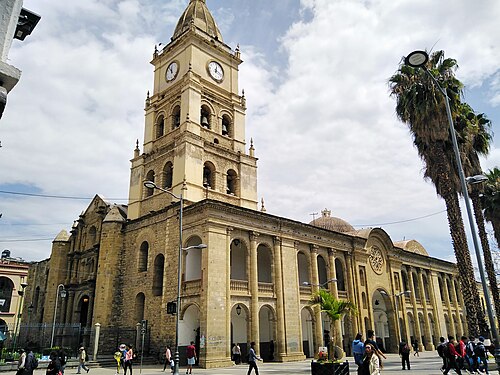
Cochabamba is a prominent city located in central Bolivia, known for its pleasant climate and diverse cultural heritage. Situated in a fertile valley at an altitude of approximately 2,500 meters (8,200 feet) above sea level, Cochabamba is often referred to as "La Ciudad Jardín" or the Garden City, thanks to its lush greenery and agricultural productivity. The city serves as the capital of the Cochabamba Department and has a population of over 600,000 inhabitants, making it one of the largest cities in the country. The region is renowned for its agricultural output, particularly in the production of fruits, vegetables, and grains, which are vital to both local and national economies. The city’s central location also makes it an important transportation hub, connecting various regions of Bolivia.
Cochabamba boasts a rich history and a vibrant cultural landscape. Founded in 1571 by Spanish conquistador Juan de Salinas, it became a center of trade and commerce during the colonial period. Today, it is known for its blend of indigenous and Spanish influences, reflected in its architecture, cuisine, and festivals. One of the most prominent landmarks in the city is the Christ of the Concord, a colossal statue of Jesus Christ that stands on a hill overlooking Cochabamba, offering stunning views of the valley. The city is also famous for its annual folklore festival, the Semana Santa, which draws thousands of visitors with its traditional dances, music, and colorful parades. Observing local customs and traditions is a vital aspect of life in Cochabamba, with various indigenous communities contributing to the city's cultural tapestry. Such features, along with its striking natural beauty, make Cochabamba a unique destination that highlights both Bolivia's historical significance and its contemporary vibrancy.
Facts about Cochabamba
- Cochabamba is known as the 'City of Eternal Spring' due to its mild climate throughout the year.
- It is home to the world's largest statue of Christ, the Cristo de la Concordia, which stands 34.2 meters tall, higher than the Christ the Redeemer statue in Rio de Janeiro.
- Cochabamba hosts the annual 'Fiesta de la Virgen de Urcupiña', one of Bolivia's most important religious festivals, attracting thousands of pilgrims and visitors.
- The city is famous for its culinary diversity, particularly the traditional dish 'salteñas,' a type of baked pastry filled with meat, vegetables, and spices.
- Cochabamba has a rich history tied to agriculture and is often referred to as the 'breadbasket' of Bolivia due to its fertile valleys and extensive farming.
- It is also known for its vibrant art scene, with numerous galleries and cultural events showcasing local artists and musicians.
- Cochabamba is the site of the 2000 Cochabamba Water War, a major protest against the privatization of the city's water supply, which galvanized social movements across Bolivia.
- The city's Parque de la Familia (Family Park) features a large pond and recreational spaces, making it a popular destination for families and tourists.
- Cochabamba's proximity to the Andes mountains provides opportunities for outdoor activities such as hiking, mountain biking, and rock climbing.
- The city features a unique blend of indigenous and colonial architecture, with striking structures such as the Plaza 14 de Septiembre and the San Sebastián Basilica.