Corfu, Greece
- 27,003 people
- 10 places to visit
- 39.6243, 19.9217
Places to Visit (10)
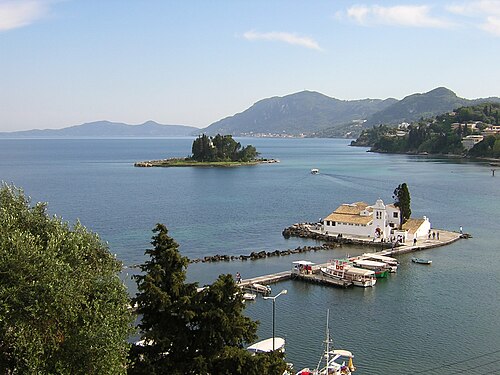
Corfu, known as Kerkyra in Greek, is a picturesque island located in the Ionian Sea, off the northwestern coast of Greece. It is the second-largest island of the Ionian group, renowned for its rich history, vibrant culture, and stunning natural beauty. The island has a strategic position, serving as a bridge between Greece and Italy, which has influenced its development and the diverse cultures that have thrived there throughout history. The city of Corfu, the island's capital, boasts a blend of Venetian, French, British, and Greek architectural styles, highlighting its multifaceted heritage. The Old Town of Corfu is a UNESCO World Heritage Site, characterized by its charming narrow alleys, historic fortresses, and picturesque squares.
Corfu has a Mediterranean climate, typical of the region, featuring hot, dry summers and mild, wet winters. This climate contributes to the island's lush greenery and its reputation as a tourist destination, attracting millions of visitors each year. The island is famous for its beautiful beaches, clear turquoise waters, and scenic landscapes, making it a paradise for outdoor enthusiasts and beachgoers alike. Additionally, Corfu offers a lively cultural scene, hosting numerous festivals, music events, and local celebrations that showcase traditional Greek customs and culinary delights. The island is also home to historical landmarks, such as the Old Fortress, the Liston promenade, and Achilleion Palace, a neoclassical mansion built for Empress Elisabeth of Austria.
Tourism is a key component of Corfu's economy, with a wide range of accommodations, restaurants, and recreational activities catering to visitors. Beyond its tourism appeal, Corfu is also known for its agricultural products, particularly olives and wine. The island produces a variety of local dishes, incorporating fresh ingredients and Mediterranean flavors, which reflect its culinary heritage. Overall, Corfu stands out as a vibrant destination that combines natural beauty, rich history, and warm hospitality, making it a unique spot in the Aegean region.
Facts about Corfu
- Corfu is known for its unique blend of Greek, Italian, and British influences, evident in its architecture and cuisine.
- The Old Town of Corfu is a UNESCO World Heritage Site, famous for its well-preserved Venetian fortresses and narrow alleys.
- Corfu was the first island in Greece to have a unified government in the 19th century following the end of British rule in 1864.
- The island hosts the famous Corfu Carnival, one of the largest and oldest carnivals in Greece, attracting thousands of visitors annually.
- Corfu is home to the Achilleion Palace, built for Empress Elisabeth of Austria, which features stunning gardens and neoclassical architecture.
- The island has a rich history of being a strategic naval base, which is reflected in its defensive structures dating back to the Byzantine period.
- Corfu is the birthplace of the famous British diplomat and writer, Edward Lear, known for his literary contributions and illustrations.
- The island's lush landscapes and diverse ecosystems are recognized as a biodiversity hotspot, with rare species of plants and animals.
- Corfu has a tradition of producing high-quality olives and olive oil, making it one of the key agricultural products of the island.
- The island celebrates the unique 'Feast of the Assumption' with an unusual custom of tossing clay pots from the balconies, symbolizing the abundance of crops.