Crotone, Italy
- 64,603 people
- 10 places to visit
- 39.0808, 17.1272
Places to Visit (10)
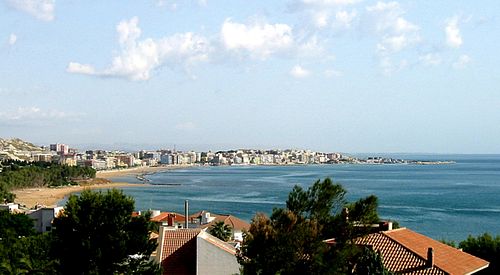
Crotone is a historic city located in the Calabria region of southern Italy, perched on the Ionian Sea. It serves as the capital of the province of Crotone and has a population of approximately 60,000 residents. The city has a rich history that dates back to ancient times, founded in the 8th century BC by Greek settlers from Achaea, originally known as Croton. It was known as a flourishing center for medicine and philosophy, home to the famous Pythagorean school founded by the mathematician Pythagoras. Ancient Croton was renowned for its athletes, producing champions who participated in the ancient Olympic Games. Archaeological remains in the area, including the remnants of ancient temples and the city walls, highlight its importance during antiquity.
In addition to its historical significance, Crotone boasts natural beauty and a picturesque coastal landscape, characterized by rocky cliffs and sandy beaches. The city's economy traditionally relied on agriculture, fishing, and trade, with the surrounding area fertile for the cultivation of grapes, olives, and citrus fruits. Over the years, Crotone has modernized while still preserving its cultural heritage. Landmarks such as the medieval Castello di Crotone, built in the 15th century, and the church of San Domenico exemplify the region's architectural evolution. The city's vibrant culture is reflected in numerous local festivals, including the popular Tarantella Festival, which celebrates traditional music and dance.
Crotone's strategic location has historically made it an important port city. However, it has faced economic challenges in recent decades, prompting efforts toward revitalization. The city is served by a small airport and maintains connections to larger cities such as Naples and Rome through rail and road networks. Its mild Mediterranean climate attracts both locals and tourists, particularly during the summer months. Visitors can explore the nearby National Park of Capo Rizzuto, which is known for its biodiversity and archaeological sites. Overall, Crotone is a blend of ancient history, stunning landscapes, and modern aspirations, making it a unique place in the heart of Calabria.
Facts about Crotone
- Crotone is historically known as Croton, an ancient Greek city founded in the 8th century BC, and was a prominent center of philosophy and athletics.
- It is famous for being the home of the Pythagorean school, founded by the mathematician Pythagoras, who contributed significantly to philosophy and mathematics.
- Crotone has a unique archaeological site called the Capo Colonna, which features the ruins of a former Temple of Hera, dating back to the 6th century BC.
- The city is closely associated with the ancient Olympic champion Milo of Croton, who was celebrated for his extraordinary strength and athletic achievements.
- Crotone's coastline is known for its stunning beaches and the nearby Marine Park of Capo Rizzuto, which protects diverse marine life and natural beauty.
- The city hosts the annual Tarantella Festival, celebrating the traditional dance and music of the region, which differentiates it from other cultural events in Italy.
- Crotone is distinguished by its culinary specialty, 'Crotone's sardines,' which are praised for their fresh flavors and are part of the local fishing tradition.
- During World War II, Crotone was the site of significant military activity and has several remnants of historical fortifications from that era, unlike many other coastal cities in Italy.
- Crotone has a unique blend of Greek and Roman influences that is visible in its architecture, cuisine, and local traditions, making it a cultural melting pot.
- The city is an important center for the production of 'Ciro' wine, which has been granted Denominazione di Origine Controllata (DOC) status, highlighting its regional significance.