Croydon, United Kingdom
- 173,314 people
- 19 places to visit
- 51.3769, -0.0957
Places to Visit (19)
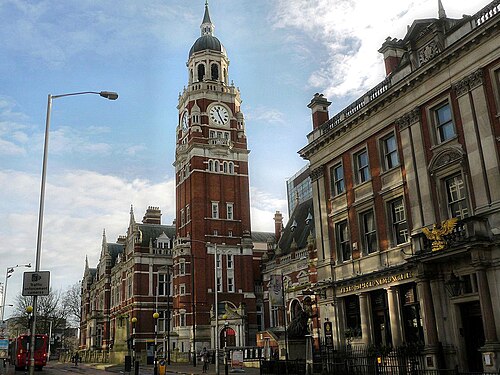
Croydon is a vibrant town located in South London, United Kingdom, identified as part of the metropolitan borough of Croydon. Situated approximately 9.5 miles south of central London, it has developed into one of the largest commercial districts outside the capital. Originally a modest settlement, Croydon has a rich history that dates back over a thousand years, with records indicating its establishment as a market town in the medieval period. The town played a crucial role during the Victorian era, growing significantly due to the expansion of the railway networks, which facilitated easier access to London and prompted an increase in residential developments.
Today, Croydon is known for its diverse community and dynamic urban landscape. The town boasts a mix of modern and historic architecture, with landmarks such as the iconic Croydon Clocktower, the 1960s-built Whitgift Centre, and the more recent construction of the tall residential buildings in the area known as the Croydon Boxpark. It is a key shopping destination with a wide variety of retail options, ranging from high street names to independent boutiques. Croydon has a robust cultural scene, which is supported by numerous theatres, galleries, and music venues. The town also hosts several annual events, including the Croydon Carnival and the Croydon Mela, celebrating the area's multicultural heritage.
In terms of transportation, Croydon is well-served by public transit, featuring two major railway stations: East Croydon and West Croydon, as well as several tram services connecting it to surrounding areas. The local government has made significant investments to improve infrastructure and promote sustainable development, reaffirming Croydon’s status as a vital part of London’s economy and community life. With its ongoing regeneration projects and a commitment to enhancing quality of life, Croydon is evolving into a modern hub that retains its historical significance while adapting to contemporary urban needs.
Facts about Croydon
- Croydon is home to the iconic Croydon Clocktower, a multipurpose arts and cultural center which houses a library, cinema, and performance spaces, making it a unique hub for community engagement.
- The area claimed the first recorded occurrence of a ‘Croydon’ name in the 9th century as Croydon appears in the Domesday Book of 1086, showcasing its long-standing historical significance.
- Croydon served as the birthplace of the iconic British band, The Bee Gees, who were born on the same street, demonstrating the area’s contribution to the music scene.
- The bustling Centrale and Whitgift Shopping Centres in Croydon have one of the largest shopping selections outside of central London, making it a key retail destination.
- Croydon is noted for its extensive tram network, which is one of the few of its kind in the UK, enhancing local public transport options and linking it effectively to central London.
- The town was the site of an ancient Roman settlement, adding layers to its archaeological significance, such as the remains of a 2nd-century Roman villa discovered in the area.
- Croydon's annual International Mela is one of the largest free festivals in the UK celebrating multiculturalism with music, dance, and food, reflecting the diverse community.
- The Croydon Tech City initiative has positioned Croydon as a key player in the UK’s tech sector, fostering innovation and attracting startups and tech talent.
- The 1960s saw Croydon become a pioneering area for modern architecture, with notable structures such as the iconic Nestle Tower and the controversial Taberner House, showcasing its architectural heritage.
- Croydon has a notable connection to the aviation industry as it was the site of London’s first airport, Croydon Airport, which operated from 1920 to 1959, paving the way for commercial aviation.