Cúcuta, Colombia
- 777,106 people
- 2 places to visit
- 7.8891, -72.4967
Places to Visit (2)
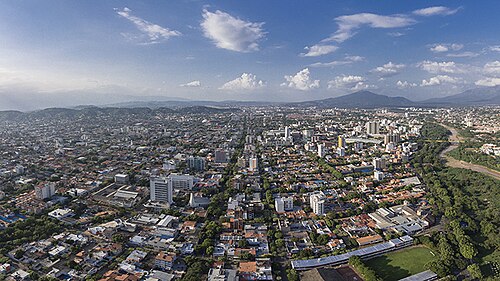
Cúcuta is a significant city located in northeastern Colombia, serving as the capital of the Norte de Santander department. Positioned near the border with Venezuela, it has a strategic geographic importance, acting as a key commercial hub between the two nations. Cúcuta sits at an elevation of approximately 320 meters (1,050 feet) above sea level and experiences a tropical climate, characterized by a distinct wet and dry season. The city has a population of around 700,000 residents, making it one of the largest cities in the region. Historically, Cúcuta was founded in 1701 and has since developed as a center for trade and commerce, especially due to its proximity to the Venezuelan border, facilitating cross-border exchanges.
The city is notable for its vibrant cultural scene, blending Colombian and Venezuelan influences due to its strategic location. Cúcuta is home to various cultural institutions, including museums, theaters, and art galleries that celebrate the region's history and artistic heritage. The city’s economy is bolstered by commerce, agriculture, and services, with a strong emphasis on trade with Venezuela, particularly in goods such as food, textiles, and electrical appliances. In recent years, Cúcuta has faced challenges due to the political and economic turmoil in Venezuela, resulting in a significant influx of Venezuelan migrants seeking better living conditions and opportunities. This migration has transformed the city's demographic landscape and placed increased pressure on local resources and infrastructure.
Cúcuta also boasts various landmarks and places of interest, including the historic Santander Park and the San José Cathedral, which contribute to its rich cultural identity. The Rapid Transits System, known as the "Sistema Estratégico de Transporte Público de Cúcuta," has been developed to improve public transport, making the city more accessible. Additionally, the nearby Pamplona and Villa de Rosario provide further opportunities for tourism and exploration. Despite economic difficulties, Cúcuta’s resilience stems from its local communities and diverse population. The city remains a crucial point of connection between Colombia and Venezuela, representing both the challenges and opportunities that arise from cross-border relations in a rapidly changing geopolitical landscape.
Facts about Cúcuta
- Cúcuta is known as the 'City of Progress' due to its significant economic growth and development, particularly in trade and commerce.
- The city played a pivotal role in the independence of Colombia, being the site of the historic Battle of Cúcuta in 1820.
- Cúcuta is located near the border with Venezuela, making it a crucial transit point for trade and migration between the two countries.
- The Santander Park in Cúcuta features a monumental statue of Francisco de Miranda, commemorating his contributions to Latin American independence.
- Cúcuta has its own distinctive cuisine, including dishes like 'arepas de chócolo' and 'bandeja paisa', which are less common in other regions.
- The city hosts the annual 'Festival Internacional de la Música de Cúcuta', attracting musicians and visitors from various countries.
- Cúcuta is home to the Puente Internacional Simón Bolívar, one of the most important bridges connecting Colombia and Venezuela.
- The city's economy is bolstered by its status as a free trade zone, attracting numerous businesses and entrepreneurs.
- Cúcuta was significantly affected by the Venezuelan migration crisis, which transformed its demographic and socio-economic landscape.
- The Cúcuta metropolitan area is one of the largest in northeastern Colombia, with a unique blend of cultures influenced by its close proximity to Venezuela.