Cumaná, Venezuela
- 405,626 people
- 8 places to visit
- 10.4319, -64.1833
Places to Visit (8)
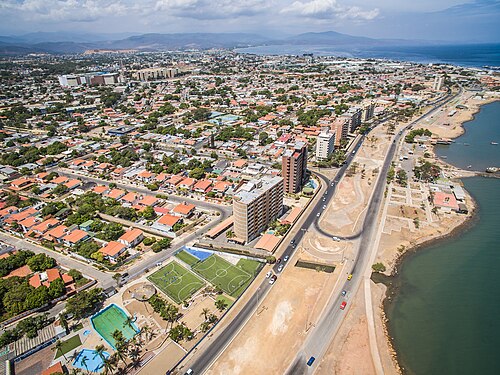
Cumaná, the capital of the Sucre state in northeastern Venezuela, is known as one of the country’s oldest cities, established in 1515 by Spanish explorer Diego de Ordaz. Located on the northern coast of Venezuela, along the Caribbean Sea, Cumaná boasts a rich historical significance and vibrant cultural heritage. The city is situated at the mouth of the Manzanares River, with its coastal position making it an important port throughout history. Cumaná played a pivotal role in the early colonial period and served as a critical center for trade and communication in the region.
The city has a diverse population and reflects a mix of indigenous, Spanish, and African influences, which contribute to its unique cultural identity. Cumaná is known for its traditional music, including styles like joropo and folklore dances, as well as its local crafts such as pottery and weaving. Notable landmarks include the Catedral de Cumaná, one of the oldest cathedrals in the Americas, and the Castillo de San Antonio de la Eminencia, a fortress that dates back to the colonial era and offers panoramic views of the city and coastline. Cumaná's economy historically relied on fishing and agriculture, particularly the cultivation of cacao and other tropical products.
In recent years, Cumaná has faced various economic challenges, exacerbated by the broader national crisis affecting Venezuela. Despite these challenges, the city's rich natural surroundings, including nearby beaches and national parks, continue to attract visitors. The region’s biodiversity and proximity to the Gran Sabana and the Andes provide opportunities for ecological tourism and outdoor activities. Cumaná retains a blend of historical charm and contemporary vitality, making it a noteworthy destination for those exploring Venezuela’s cultural and geographical landscape.
Facts about Cumaná
- Cumaná is one of the oldest continuously inhabited cities in South America, founded in 1515 by Spanish explorer Diego de Rojas.
- The city is known as the 'Cradle of Venezuela' because it was one of the first locations in the region to be settled by Europeans.
- Cumaná is located on the northeastern coast of Venezuela and serves as the capital of the Sucre state.
- The city is famous for its vibrant cultural scene, especially its music, which features elements of traditional Venezuelan folk music such as the 'gaita' and 'joropo'.
- Cumaná is near the well-known Mochima National Park, which is famous for its beautiful beaches and rich marine biodiversity.
- The historic center of Cumaná features colonial architecture, including the iconic Cathedral of Cumaná, which dates back to the 17th century.
- Cumaná is home to the unique 'Cumaná market', a bustling place renowned for its fresh seafood, particularly the local delicacy known as 'dorado' (mahi-mahi).
- The city has a significant archaeological heritage, with many sites that reveal its connections to the indigenous Carib and Arawak cultures.
- Cumaná has a tropical climate that makes it one of the warmest cities in Venezuela, often reaching high temperatures year-round.
- The city hosts various cultural festivals including the Feast of Our Lady of the Assumption, which is celebrated with processions and traditional music.