Cuneo, Italy
- 55,980 people
- 12 places to visit
- 44.3845, 7.5427
Places to Visit (12)
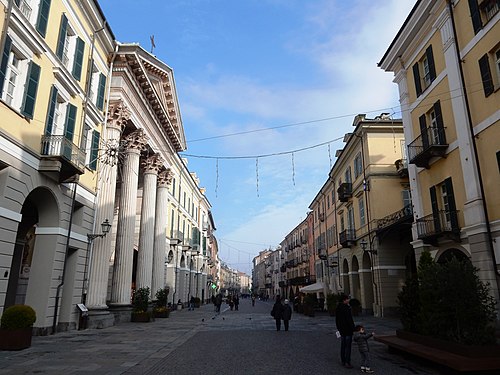
Cuneo is a picturesque city located in the northwestern region of Italy, situated at the confluence of the rivers Gesso and Stura. It serves as the capital of the province of Cuneo within the Piedmont region. With a population of approximately 56,000 residents, Cuneo is recognized for its stunning mountainous backdrop and its strategic location close to the French border, making it a gateway to the Maritime Alps and a key player in trade and tourism. The city boasts a rich history, with roots dating back to its founding in the 12th century. The historical center features notable medieval structures including the Church of San Francesco and the grand Palazzo della Prefettura, which reflect the city’s architectural heritage and serve as reminders of its historical significance.
Cuneo’s economy is diverse, heavily influenced by agriculture, manufacturing, and trade. The surrounding fertile land facilitates a thriving agricultural sector, particularly in the production of specialties like hazelnuts, wines, and cheeses. The local economy also benefits from small to medium-sized enterprises focusing on industrial production, including machine tools, textiles, and food processing. Furthermore, tourism plays a vital role, with visitors attracted to the city's charming squares, such as Piazza Galimberti, and its vibrant market culture, featuring local produce and crafts. Cuneo is also an excellent base for exploring outdoor activities in the nearby Alps, including skiing in winter months and hiking during the warmer season, appealing to nature enthusiasts and adventure seekers alike.
Cultural events and festivals are integral to the local identity of Cuneo, fostering community spirit and attracting tourists year-round. The city celebrates various traditions, including the Palio di Cuneo, a historical horse race, and numerous food festivals that highlight local cuisine. Cuneo is also well-connected by public transportation, with a railway station linking it to major cities like Turin and Nice, and an efficient bus network that facilitates travel within the region. As a blend of cultural richness, economic vitality, and natural beauty, Cuneo remains a captivating destination for both visitors and residents, grappling with its historical significance while embracing modern developments.
Facts about Cuneo
- Cuneo is known for its distinctive 'Cuneo' shape, meaning 'wedge' in Italian, which refers to its geographic location at the confluence of the Stura and Gesso rivers.
- The city played a significant role during the Italian Resistance in World War II, serving as a hub for partisan activities against the fascist regime.
- Cuneo is famous for its beautiful arcades and porticos that line the city streets, providing a unique architectural feature not commonly found in other Italian cities.
- The city hosts the annual 'Fiera del Tartufo Bianco' (White Truffle Fair), celebrating local gastronomy and attracting visitors interested in the region's culinary delights.
- Cuneo is home to the historic 'Piazza Galimberti,' which features a large central monument and serves as a gathering place for locals and tourists alike.
- The region surrounding Cuneo is known for its wine production, particularly the Dolcetto and Barbera varieties, making it part of the renowned wine-producing area of the Langhe.
- Cuneo offers stunning views of the Maritime Alps, and its proximity to the mountains provides numerous outdoor recreational opportunities, including skiing and hiking.
- The city is recognized for its unique contribution to the confectionery world, particularly through the creation of the 'Cuneesi al Rhum,' a popular chocolate treat.
- Cuneo's historical center features well-preserved buildings from the 18th and 19th centuries, giving it a charming and traditional Italian atmosphere.
- The city has a strong cultural heritage, with numerous festivals throughout the year celebrating art, music, and local traditions that reflect its diverse history.